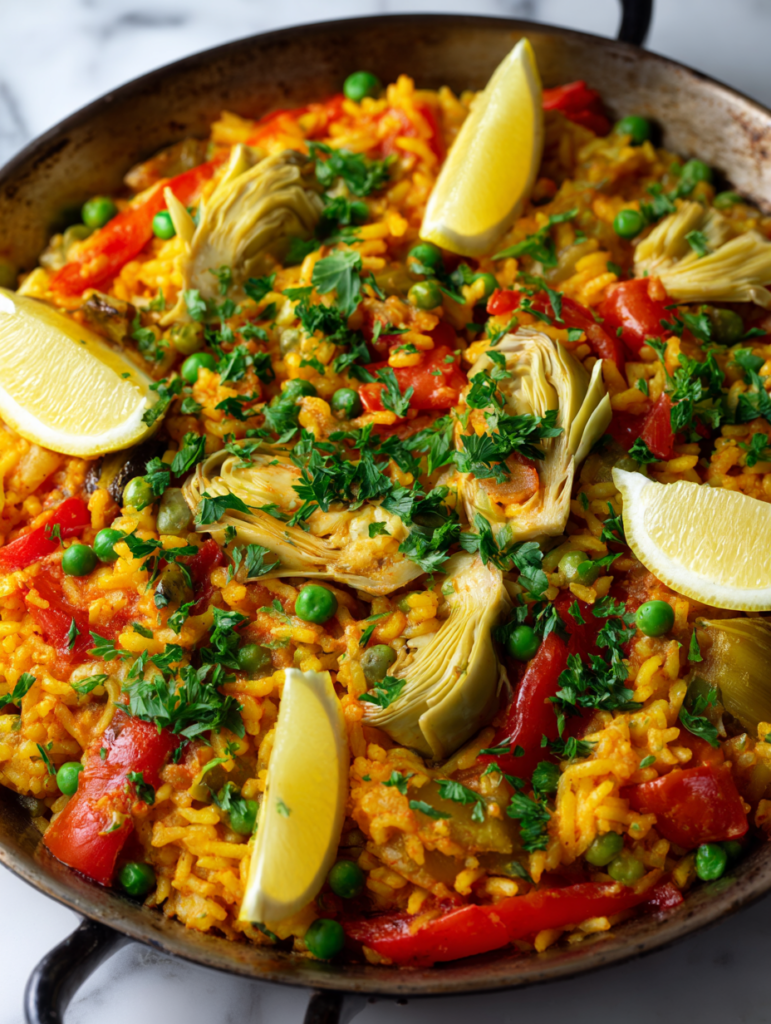
Vegan paella might sound like an oxymoron to some, but it’s one of those dishes that surprises you every time. The way it captures that warm, smoky aroma of saffron and roasted peppers, without the seafood or meat, feels almost rebellious. I love how it brings a sense of nostalgia, blending the vibrant colors and flavors of Spain with my own plant-based twist.
Cooking this dish is like a little celebration of what’s possible in the kitchen. It’s imperfect, a bit chaotic even—rice that sticks a little, a sprinkle of herbs here, a splash of lemon there. But every spoonful feels like a warm hug, especially when you realize how hearty and satisfying plant-based ingredients can be when treated right.
Focusing on how vegan paella can be a vibrant, comforting dish that bridges cultural traditions and modern plant-based cooking, emphasizing the sensory richness and nostalgic feel of the classic Spanish dish without seafood or meat.
A vibrant twist on tradition
- Seeing the saffron-infused rice turn a perfect golden hue always sparks a quiet thrill.
- I remember the first time I made this for friends, and their surprised smiles at the smoky, savory bites.
- There’s a strange comfort in chopping peppers and watching the dish come alive in the pan, like a small, messy celebration.
- This recipe’s warmth reminds me that plant-based food can be as bold and satisfying as traditional dishes.
The story behind this recipe
- This recipe was born out of a rainy Sunday craving something hearty but fresh, with a bit of smoky complexity. I’d been experimenting with different spice blends and suddenly remembered a trip to Spain where I tasted a paella that stuck with me—not the seafood version, but a veggie-packed, vibrant one that felt like a celebration of all things sun and soil.
- One evening, I threw together whatever was lingering in the fridge—red bell peppers, green beans, a handful of artichokes—and started cooking rice in a saffron bath. The smell of toasted spices and roasting veggies filled the kitchen, sparking that nostalgic, homey feeling I chase in my cooking. It’s messy, imperfect, but somehow just right every time.
- heading: ‘The story behind this recipe’
Trivia and historical tidbits
- Paella originated in Valencia, Spain, as a rural dish cooked over open fires, using the ingredients at hand.
- Traditionally, seafood and meats were the main proteins, making vegan adaptations a modern twist that highlights seasonal vegetables.
- The saffron in paella isn’t just for color; it’s a historical luxury ingredient, once so costly that only the wealthy could afford it.
- Vegan paella often challenges the idea that the dish must include seafood to be authentic, showcasing how versatile traditional recipes can be.
- In recent years, plant-based versions of paella have gained popularity, especially among those seeking hearty, comforting meals without animal products.
Ingredient breakdown: key components
- Bomba or short-grain rice: I love how bomba rice absorbs flavors and stays firm, but you can swap in Arborio if needed—just watch the texture stay tender, not mushy. The aroma of toasted rice with saffron is unbeatable.
- Saffron threads: Watching these tiny strands bloom in warm water is satisfying, and they infuse a golden hue and deep aroma. If you don’t have saffron, smoked paprika adds smoky warmth, though it won’t have that floral brightness.
- Bell peppers: Roasted red peppers bring sweetness and color, making the dish pop. If fresh peppers aren’t available, roasted jarred peppers work—just drain well so they don’t make the rice soggy.
- Green beans: They add a fresh crunch and a slight grassy note. Frozen green beans are fine—just thaw and pat dry before adding, so they don’t water down the dish.
- Tomatoes: I prefer ripe, juicy tomatoes for that concentrated, bright flavor, but canned crushed tomatoes work in a pinch—just taste and adjust salt accordingly. The slight acidity balances the smoky spices.
- Vegetable broth: Use a rich, homemade broth if you can—nothing beats that depth. Store-bought works, but boost flavor with a splash of soy sauce or miso if it’s a little dull. The simmering aroma should be savory and inviting.
- Olive oil: Drizzle good-quality extra virgin before serving for that fruity, peppery finish. Skip if you want a lighter version, but it really does bring the dish to life with a shimmer and rich scent.
Spotlight on key ingredients
Bomba rice & Saffron:
- Bomba or short-grain rice: I love how bomba rice absorbs flavors and stays firm, but you can swap in Arborio if needed—just watch the texture stay tender, not mushy. The aroma of toasted rice with saffron is unbeatable.
- Saffron threads: Watching these tiny strands bloom in warm water is satisfying, and they infuse a golden hue and deep aroma. If you don’t have saffron, smoked paprika adds smoky warmth, though it won’t have that floral brightness.
Notes for ingredient swaps
- Vegetable broth: I prefer a rich, homemade broth for depth, but store-bought works—just boost flavor with a splash of soy or miso if dull. The aroma should be savory and inviting.
- Saffron: If you don’t have saffron, smoked paprika adds smoky warmth, though it won’t have that floral brightness. For a more budget-friendly option, turmeric offers a golden hue but less complexity.
- Rice: Bomba rice is ideal for its absorbency, but Arborio can work in a pinch—just keep an eye on the texture to avoid mush. The key is tender, not gluey.
- Bell peppers: Fresh roasted peppers add sweetness and vibrant color. If unavailable, jarred roasted peppers are fine—just drain well to prevent soggy rice.
- Green beans: Fresh or frozen green beans work. If frozen, thaw and pat dry so they don’t water down the dish. They add a crisp, grassy note.
- Tomatoes: Ripe fresh tomatoes give a juicy, bright flavor. Canned crushed tomatoes are a good alternative—just taste and adjust seasoning for acidity.
- Olive oil: Use good-quality extra virgin for a fruity, peppery finish. Skipping oil makes it lighter, but the richness and shimmer really enhance the dish.
Equipment & Tools
- Wide, shallow pan: Ensures even heat distribution and proper crust formation.
- Wooden spoon: For gentle stirring without damaging the pan surface.
- Ladle: To pour hot broth evenly over rice.
- Small bowl: For steeping saffron threads.
Step-by-step guide to vegan paella
- Equipment & Tools: Use a wide, shallow pan (paella pan if available) for even heat and slight caramelization. Have a wooden spoon for stirring, a ladle for broth, and a small bowl for saffron water ready.
- Heat 2 tbsp olive oil over medium heat (around 180°C/356°F). Once shimmering, add chopped onions and garlic. Cook until translucent, about 5 minutes, until the kitchen smells sweet and savory.
- Stir in diced red peppers and green beans. Cook for another 5 minutes, stirring often, until peppers soften and green beans turn vibrant. They should smell sweet and slightly smoky.
- Add 1.5 cups of bomba rice. Toast it gently, stirring constantly, until the grains look slightly translucent and smell nutty—about 2-3 minutes. If it sticks or smells burnt, lower the heat.
- Pour in 1/4 cup of saffron threads steeped in 1/4 cup warm water. Stir to evenly coat the rice. The water should turn a vivid yellow and the saffron aroma should bloom, earthy and floral.
- Pour in 4 cups vegetable broth, heated beforehand. Spread the rice evenly, then lower the heat to medium-low (around 160°C/320°F). Do not stir from now on to allow the rice to form a crust. Cook for 20 minutes, until the broth is absorbed and rice is tender but firm.
- Place cherry tomatoes or diced ripe tomatoes on top during the last 5 minutes. Let the heat gently roast them, bringing out a burst of bright, slightly sweet acidity. Check for a slight crackle in the rice surface, indicating a crust forming.
- Add pre-cooked artichokes or mushrooms if using, for extra umami. Cover loosely and let rest off heat for 5 minutes. This helps the flavors meld and the rice finish cooking gently.
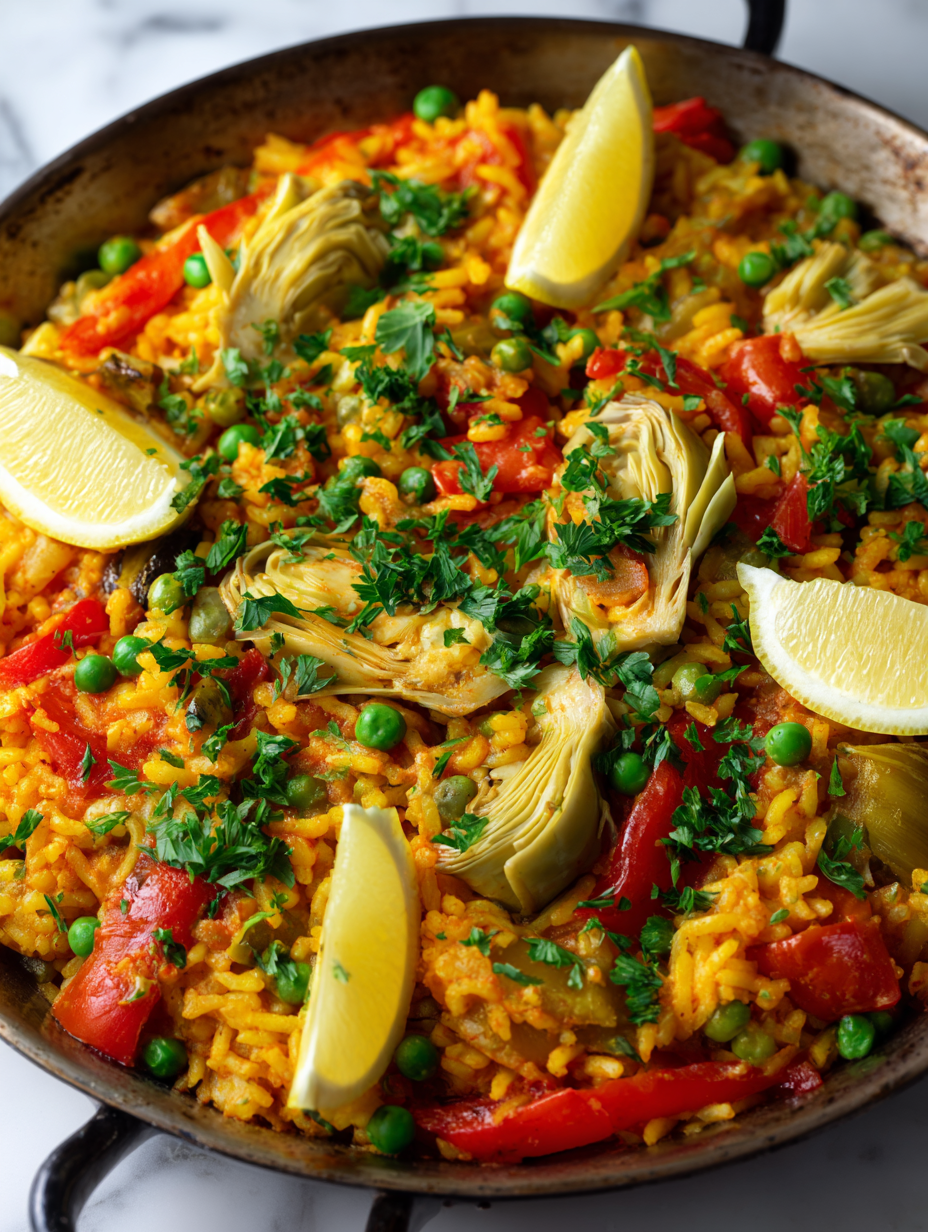
- Final checkpoints: rice should be tender and slightly al dente, with a golden crust at the bottom; the veggies should be roasted and fragrant; and the aroma should be a smoky-saffron burst. If not, cover and cook a few more minutes or add a splash of broth.
- Rest the paella uncovered for 5 minutes after cooking. Drizzle with a little more olive oil and lemon juice if desired. Serve straight from the pan, spooning out the smoky, colorful rice with a crusty bottom.
Once cooked, let the paella rest uncovered for 5 minutes. Finish with a drizzle of olive oil and a squeeze of lemon for brightness. Serve directly from the pan, allowing the crusty bottom to be part of the experience.
How to Know It’s Done
- Crusty bottom layer with a golden hue and fragrant aroma.
- Rice is tender but holds shape, not mushy.
- Veggies are roasted and vibrant, with a slight char.
Vegan Paella
Ingredients
Equipment
Method
- Steep the saffron threads in 1/4 cup warm water in a small bowl until fragrant and vibrant yellow, about 10 minutes.
- Heat the wide, shallow pan over medium heat and add the olive oil. Once shimmering, add the chopped onion and minced garlic, cooking until translucent and fragrant, about 5 minutes.
- Add the diced roasted red pepper and green beans to the pan. Cook for another 5 minutes, stirring often, until the peppers soften and the green beans brighten.
- Stir in the rice, toasting it gently while stirring constantly, until it looks slightly translucent and releases a nutty aroma—about 2-3 minutes.
- Pour the saffron water into the rice, stirring to coat all the grains evenly. The water will turn a deep yellow and fill the air with a floral aroma.
- Add the warm vegetable broth to the pan, spreading the rice evenly. Bring to a gentle simmer, then reduce the heat to low and cook uncovered for about 20 minutes, without stirring, until the liquid is absorbed and the rice is tender but firm.
- During the last 5 minutes of cooking, scatter the chopped tomatoes and artichoke hearts on top, allowing them to roast slightly and release their bright flavors.
- Turn off the heat and let the paella rest uncovered for 5 minutes, allowing the flavors to meld and a crispy crust to form at the bottom.
- Finish by drizzling a little more olive oil and a squeeze of lemon over the top, then serve directly from the pan, enjoying the smoky, colorful, and fragrant dish.
Tips & Tricks for Perfect Paella
- Toast the rice until it smells nutty and looks slightly translucent before adding broth, for depth.
- Bloom saffron in warm water until it releases a deep yellow hue and floral aroma—don’t rush this step.
- Use a wide pan to promote even cooking and develop that crispy bottom crust, but watch for over-torching.
- Keep the broth simmering gently—too vigorous and the rice may cook unevenly or burn at the bottom.
- When adding the vegetables, aim for vibrancy—slightly undercooked veggies retain crunch and fresh flavor.
- Rest the paella uncovered for 5 minutes after cooking—this allows flavors to meld and crust to set.
- Finish with a drizzle of good olive oil and lemon for brightness—these small touches lift the dish.
Common mistakes and how to fix them
- FORGOT to stir the rice early → Stir frequently in the first 10 minutes to prevent sticking.
- DUMPED too much broth at once → Add broth gradually, allowing rice to absorb slowly for even cooking.
- OVER-TORCHED the bottom layer → Lower heat if crust turns dark too quickly, to avoid bitterness.
- MISSED the resting step → Rest the paella uncovered 5 minutes for flavor melding and crust formation.
Quick Fixes and Pantry Swaps
- When rice sticks, splash cold water into the pan and gently loosen the grains.
- If the saffron water is too faint, add an extra pinch and steep for 5 minutes more.
- Splash a little lemon juice if the dish feels flat or dull on flavor.
- Patch soggy rice by spreading it thin and crisping in a hot pan for a few minutes.
- Shield burnt bottom by removing the pan from heat immediately and adding a splash of broth.
Prep, store, and reheat tips
- Pre-chop vegetables like peppers and green beans ahead; store in airtight containers for up to 2 days. Their fresh crunch makes a difference.
- Cook the rice and steep saffron the day before. Keep both refrigerated separately; reheat gently to preserve texture and aroma.
- The paella tastes best fresh, but leftovers can be stored in the fridge for up to 2 days. The saffron flavor will deepen, and the rice may firm up slightly.
- Reheat gently on the stove over low heat, adding a splash of broth to revive moisture. The aroma should shimmer with saffron and roasted pepper notes, and the rice should heat evenly without sticking.
Top questions about vegan paella
1. Can I use other types of rice?
Use short-grain rice like bomba or Arborio for the best texture. They absorb flavors well and stay firm.
2. How do I get the saffron flavor right?
Steep saffron threads in warm water for at least 10 minutes until they bloom and release color and aroma.
3. Can I use frozen vegetables?
Frozen green beans work fine; thaw and pat dry to prevent watering down the dish.
4. How do I avoid soggy rice?
Add broth gradually, about 1/4 cup at a time, letting it absorb before adding more. This helps prevent sogginess.
5. What if I don’t have saffron?
You can substitute smoked paprika for saffron if you want a smoky flavor, but it won’t have the same floral brightness.
6. How do I know when the paella is done?
Cook the rice uncovered on low heat for about 20 minutes until the liquid is absorbed and the bottom develops a crust.
7. Should I cover the paella after cooking?
Rest the cooked paella uncovered for 5 minutes after removing from heat to let flavors meld and crust set.
8. What equipment do I need?
Use a wide, shallow pan for even heat distribution and crust development. A paella pan is ideal but a large skillet works too.
9. When should I add the vegetables?
Add roasted peppers and tomatoes late in cooking so they retain their vibrant color and fresh flavor.
10. Can I make this ahead?
Leftovers can be stored in the fridge for up to 2 days. Reheat gently on the stove with a splash of broth.
Making this vegan paella isn’t just about the ingredients, but about the messy, fragrant process of building something hearty and bright from scratch. It’s a dish that reminds me that comfort can come from simple, honest cooking, especially when it fills the kitchen with smoky saffron and roasted peppers. Every time I make it, I feel a little more connected to those vibrant Spanish flavors, even in my own cluttered kitchen.
In the end, it’s not perfect — maybe some rice sticks to the pan or the colors aren’t as vivid as I’d like. But it’s real, it’s alive, and it’s exactly what I need sometimes — a warm, satisfying reminder that plant-based can be deeply flavorful and fulfilling. That’s why I keep coming back to this recipe, season after season.