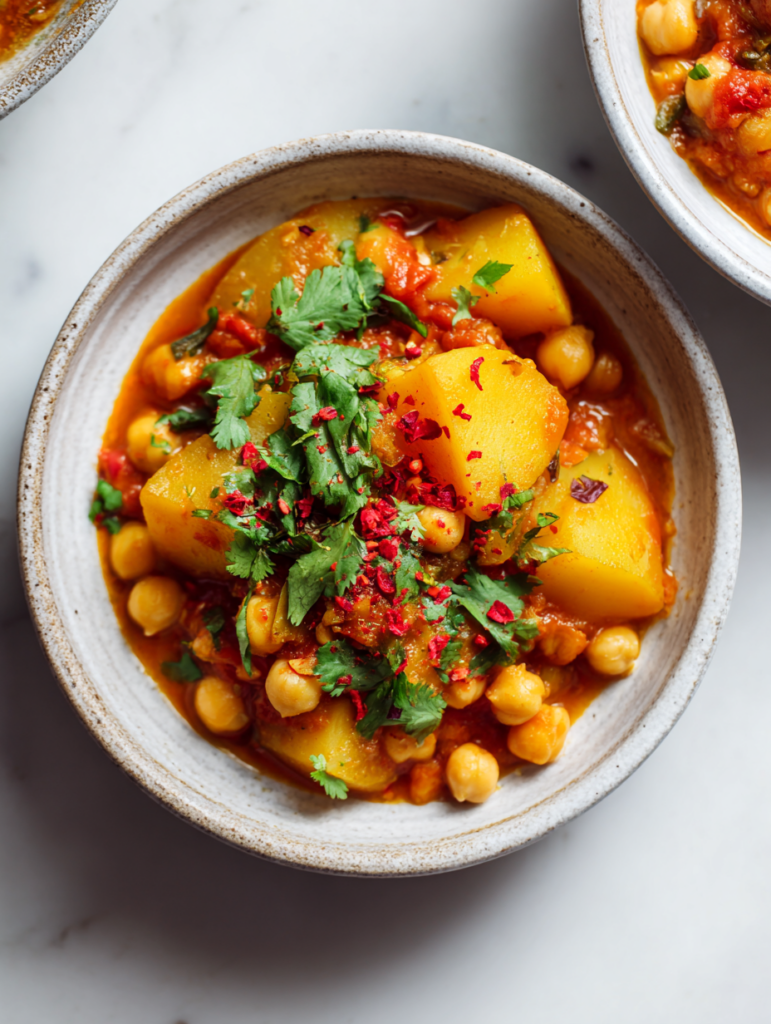
This chickpea potato curry is my go-to when I need something warm and filling but don’t want to fuss with fresh ingredients. It’s inspired by those lazy weekend afternoons when my pantry is half-empty but I still crave something hearty. The smell alone—spicy, smoky, with a hint of earthiness from the potatoes—can make any kitchen feel like home.
I make this dish a lot when I want comfort without the time commitment. It’s honest, straightforward, and relies on simple pantry staples that I always keep stocked. Plus, it’s so forgiving—if I forget a spice or have a slightly different potato, it still turns out just right, cozy and satisfying.
There’s a nostalgic charm to this curry, like a warm blanket on a chilly day. It’s a reminder that you don’t need fancy ingredients to make something memorable. Just a little patience, a few good spices, and those humble potatoes and cans of chickpeas—suddenly, you’ve got dinner that feels like a hug.
This recipe is inspired by my grandmother’s humble approach—using pantry staples to create a comforting, vibrant curry that’s perfect for busy weeknights when fresh ingredients are scarce. It’s about transforming simple cans and potatoes into something that feels like a warm hug, with layers of spice and a touch of nostalgia. I love how this dish proves that you don’t need fancy ingredients to make something deeply satisfying.
A Pantry Staple Revival
- Making this curry always reminds me of those rainy afternoons spent in my grandmother’s kitchen, where the air was thick with spice and stories.
- I love how this dish feels like a small rebellion against the fancy, complicated recipes—simple, honest, and deeply satisfying.
- There’s a quiet pride in turning pantry staples into something so warm and hearty, especially after a long day.
- Every time I cook this, I think about how food can be a small act of love, especially when it comes from humble ingredients.
- It’s funny how a dish like this can evoke a sense of nostalgia, making me feel connected to my roots and those lazy weekend mornings.
The story behind this recipe
- This dish came together one rainy afternoon when I rummaged through my pantry and found a lonely can of chickpeas and some wrinkled potatoes. I wanted something warm and filling but didn’t want to run to the store. The idea of turning simple ingredients into something satisfying stuck with me, and I started experimenting with spices and coconut milk.
- It’s a kind of culinary rebellion—using what’s already in my kitchen to create comfort. The act of chopping potatoes, simmering everything together, and finally smelling that rich, smoky aroma feels like a small victory. It’s honest food, made with pantry staples, that somehow feels special every time I cook it.
- heading: ‘The story behind this recipe’
Historical & Cultural Notes
- This curry’s roots trace back to humble pantry cooking, common in many home kitchens worldwide.
- It’s inspired by traditional Indian chickpea stews but adapted with local, accessible ingredients.
- Potatoes and chickpeas together create a satisfying texture that’s been a comfort food for generations.
- The dish’s simplicity and reliance on spices reflect a long history of resourceful, frugal cooking.
Ingredient breakdown: key components
- Chickpeas: I prefer canned for convenience, but dried soaked overnight work just as well—just need more planning. They get creamy and slightly oozy when simmered, adding a hearty texture.
- Potatoes: Russets are my go-to for their fluffy interior, but Yukon Golds bring a buttery richness that’s lovely. Slice them evenly so they cook at the same pace and soak up flavors.
- Coconut Milk: The can I use is full-fat and rich, giving the curry a silky mouthfeel and subtle sweetness—if you want lighter, try coconut cream diluted, but it won’t be quite as luscious.
- Spices: I keep a jar of smoked paprika and turmeric for that smoky, earthy aroma and vibrant color. Toast them briefly in oil to unlock their full flavor—don’t skip this step.
- Onions & Garlic: Sautéing these until they’re golden and fragrant transforms the base—if you burn them, start over, but a light caramelization adds depth.
- Tomatoes: Canned crushed tomatoes are my shortcut; fresh would be lovely, but they add a bright, slightly tangy note that balances the richness. Use the juice too for extra flavor.
- Oil & Seasonings: I use a neutral oil with a high smoke point, like canola or sunflower, to fry spices and onions—if you prefer, ghee adds a nutty richness, but keep an eye on the heat to prevent burning.
Spotlight on key ingredients
Chickpeas and Potatoes:
- Chickpeas: I prefer canned for convenience, but dried soaked overnight work just as well—just need more planning. They get creamy and slightly oozy when simmered, adding a hearty texture.
- Potatoes: Russets are my go-to for their fluffy interior, but Yukon Golds bring a buttery richness that’s lovely. Slice them evenly so they cook at the same pace and soak up flavors.
Notes for ingredient swaps
- Canned Chickpeas: I prefer the convenience of canned, but dried soaked overnight work just as well—just need more planning. They get creamy and slightly oozy when simmered, adding a hearty texture.
- Potatoes: Russets are my go-to for their fluffy interior, but Yukon Golds bring a buttery richness that’s lovely. Slice them evenly so they cook at the same pace and soak up flavors.
- Coconut Milk: The can I use is full-fat and rich, giving the curry a silky mouthfeel and subtle sweetness—if you want lighter, try coconut cream diluted, but it won’t be quite as luscious.
- Spices: I keep a jar of smoked paprika and turmeric for that smoky, earthy aroma and vibrant color. Toast them briefly in oil to unlock their full flavor—don’t skip this step.
- Onions & Garlic: Sautéing these until they’re golden and fragrant transforms the base—if you burn them, start over, but a light caramelization adds depth.
- Tomatoes: Canned crushed tomatoes are my shortcut; fresh would be lovely, but they add a bright, slightly tangy note that balances the richness. Use the juice too for extra flavor.
- Oil & Seasonings: I use a neutral oil with a high smoke point, like canola or sunflower, to fry spices and onions—if you prefer, ghee adds a nutty richness, but keep an eye on the heat to prevent burning.
Equipment & Tools
- Large deep pan or Dutch oven: Cook the curry evenly and contain all ingredients.
- Wooden spoon: Stir and scrape the bottom to prevent sticking.
- Measuring spoons: Accurately measure spices and liquids.
- Sharp knife: Chop onions, garlic, and potatoes precisely.
Step-by-step guide to chickpea potato curry
- Gather all equipment: a large deep pan or Dutch oven, a wooden spoon, measuring spoons, and a sharp knife. Preheat your pan on medium heat (about 160°C/320°F).
- Drain and rinse a can of chickpeas. Set aside. Peel and chop 2 medium potatoes into 1-inch cubes. Keep ready.
- Add 2 tablespoons of oil to the pan. When shimmering, toss in 1 chopped onion. Sauté for 5-7 minutes until golden and fragrant, stirring occasionally.
- Stir in 2 teaspoons of smoked paprika and 1 teaspoon of turmeric. Toast spices for 30 seconds until fragrant—avoid burning. Smell should turn smoky and earthy.
- Add 2 minced garlic cloves and cook for another minute. Then, pour in 1 can of crushed tomatoes. Cook for 8-10 minutes, stirring, until the mixture thickens and the oil begins to shimmer around the edges.
- Toss in the potatoes and chickpeas. Pour in 1 can of coconut milk. Bring to a gentle simmer. Cover, reduce heat to low (about 90°C/194°F), and cook for 20 minutes, stirring occasionally.
- Check for doneness: potatoes should be tender, chickpeas creamy, and sauce slightly thickened. If potatoes are still firm, cook for an additional 5 minutes. If sauce is too thin, uncover and simmer a few more minutes until it coats the back of a spoon.
- Remove from heat. Let the curry rest for 5 minutes—this helps flavors meld and thickens the sauce. Taste and adjust salt or spice if needed.
- Serve hot, garnished with fresh herbs if desired. Pair with rice or crusty bread for a complete meal.
Let the curry sit off heat for 5 minutes, then stir gently. Taste again and adjust salt or spices. Serve in bowls, garnished if desired.
How to Know It’s Done
- Potatoes are tender and easily pierced with a fork.
- Sauce is thickened and coats the chickpeas and potatoes.
- Smell of toasted spices is rich and smoky, with hints of coconut.
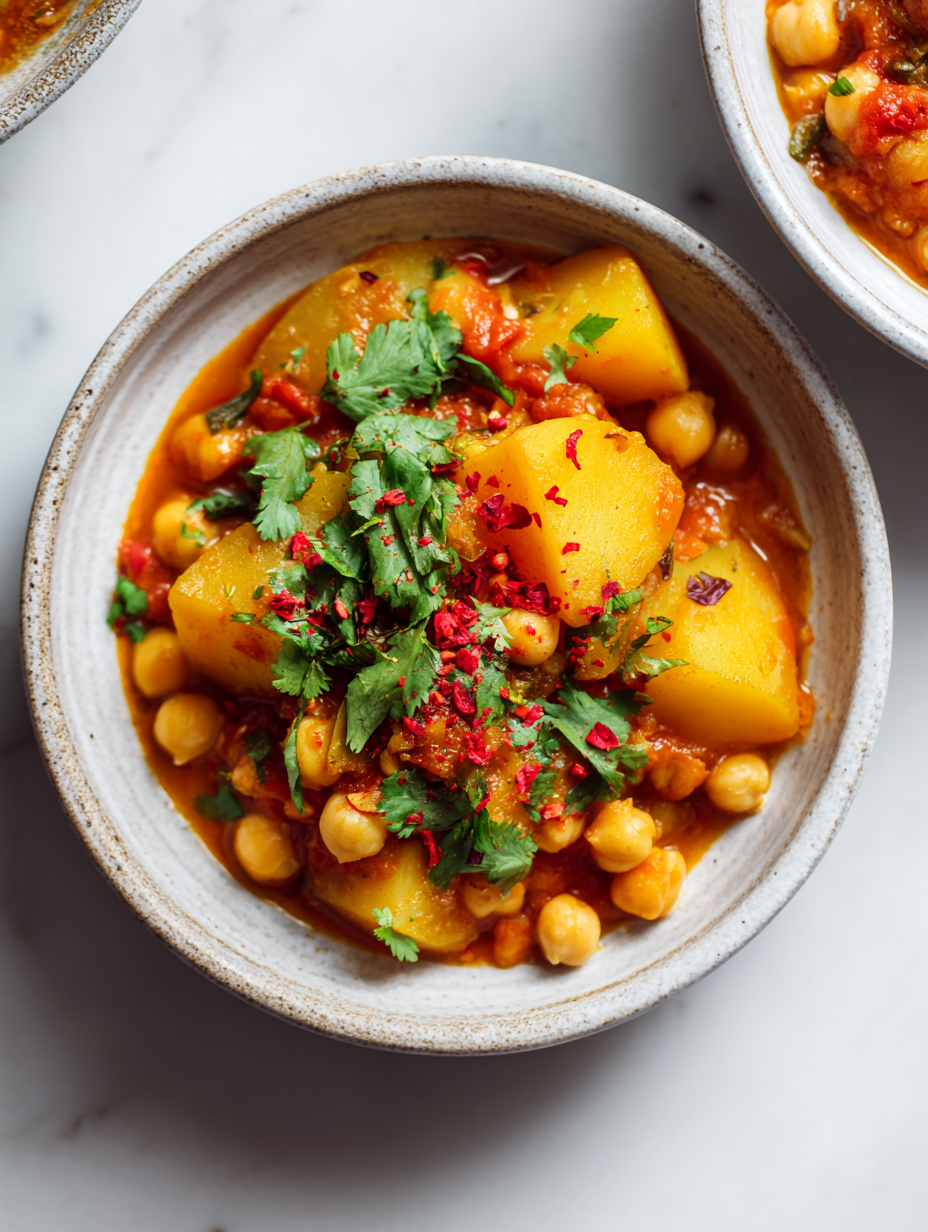
Chickpea Potato Curry
Ingredients
Equipment
Method
- Start by gathering all your equipment and ingredients. Peel and dice the potatoes into 1-inch cubes, and chop the onion finely. Rinse and drain the chickpeas.
- Heat the oil in a large deep pan over medium heat until shimmering. Add the chopped onion and sauté for about 5-7 minutes, stirring occasionally, until it turns golden and fragrant, filling the kitchen with a sweet aroma.
- Stir in the smoked paprika and turmeric, cooking for about 30 seconds until the spices release their smoky aroma and turn slightly darker, coating the onions with vibrant color.
- Add the minced garlic to the pan and cook for another minute, stirring constantly until fragrant, making sure not to burn it.
- Pour in the crushed tomatoes along with their juice. Stir well, scraping up any browned bits from the bottom. Let this simmer for 8-10 minutes, until the mixture thickens slightly and the oil begins to shimmer around the edges.
- Add the diced potatoes and drained chickpeas to the pan. Pour in the coconut milk and stir everything together. Bring the mixture to a gentle simmer, then reduce the heat to low and cover the pan.
- Let the curry cook uncovered on low heat for about 20 minutes, stirring occasionally, until the potatoes are tender and the sauce has thickened to a velvety consistency. If it gets too thick, stir in a splash of water or broth.
- Uncover and cook for an additional 5 minutes if needed, to allow the sauce to deepen and coat the potatoes and chickpeas evenly. Taste and season with salt as desired.
- Remove from heat and let the curry rest for 5 minutes. This helps the flavors meld and the sauce to settle. Serve hot with rice or bread, garnished with fresh herbs if you like.
Pro tips for perfect curry
- Toast spices in oil until fragrant to unlock deep, smoky flavors that form the curry’s backbone.
- Sauté onions slowly until golden; patience here yields a sweeter, richer base for the sauce.
- Add garlic towards the end of sautéing spices; it burns easily, so keep stirring for a fragrant lift.
- Simmer chickpeas and potatoes gently; high heat can break down textures and muddle flavors.
- Use the back of a spoon to mash some potatoes before serving to thicken the curry naturally.
- Finish with a splash of lemon or lime; brightens the richness and adds a fresh, zingy contrast.
Common mistakes and how to fix them
- FORGOT to adjust heat, spices can burn and turn bitter.
- DUMPED all ingredients at once, better to layer flavors gradually.
- OVER-TORCHED spices, toast until fragrant, not burnt—smell should be smoky, not acrid.
- REUSED pan without cleaning, leftover flavors can overpower the curry.
Quick fixes and pantry swaps
- When sauce is too thin, splash in a little more coconut milk and simmer until it shimmers.
- If spices burn, immediately lower heat and add a splash of water to cool the pan.
- Splash a dash of lemon juice when curry feels flat—it brightens all those earthy spices.
- Patch overcooked potatoes with a splash of broth and a quick stir—stops them from turning mushy.
- When in doubt, swap canned tomatoes for tomato paste mixed with water—adds richness without acidity.
Make-Ahead and Storage Tips
- You can prep the curry up to the point of simmering, then cool and refrigerate for up to 2 days. The flavors deepen overnight, making it even more comforting.
- Store in an airtight container in the fridge; the curry will thicken slightly, so stir in a splash of water or coconut milk when reheating to loosen the sauce.
- Reheat gently on the stove over low heat, stirring occasionally. The aroma of spices will intensify, and the sauce will become silky again.
- For longer storage, freeze in portions for up to 3 months. Thaw overnight in the fridge before reheating, and expect some minor texture changes, especially in the potatoes.
- When reheating, the curry may develop a richer, more integrated flavor. Check seasoning and adjust salt or spice as needed, and look for a fragrant, bubbly simmer to ensure it’s heated through.
Top questions about chickpea potato curry
1. Do I need to cook the chickpeas first?
Canned chickpeas are already cooked, so they just need to heat through and absorb flavors. Rinse well before using to remove excess salt and canning liquid.
2. How do I know when the potatoes are done?
Potatoes should be tender and easily pierced with a fork, with a slightly creamy texture. The sauce should coat them smoothly.
3. How long should I cook the curry?
Simmer the curry on low heat for about 20 minutes, stirring occasionally. The sauce will thicken and deepen in flavor as the spices meld.
4. Can I use light coconut milk?
Use full-fat coconut milk for richness and creaminess. Light coconut milk or coconut cream diluted can be substitutes but will affect the texture.
5. My curry is too watery, what do I do?
If the curry is too thick, stir in a splash of water or broth. If too thin, simmer uncovered for a few more minutes until it thickens.
6. Can I substitute sweet potatoes?
Yes, this dish works well with sweet potatoes for a slightly sweeter flavor, or with butternut squash for extra sweetness and color.
7. Should I add lemon or lime?
Adding a squeeze of lemon or lime brightens the dish, balancing the earthy spices and creamy sauce with a fresh zing.
8. How long can I keep leftovers?
Store leftovers in an airtight container in the fridge for up to 2 days. Reheat gently on the stove until simmering and fragrant again.
9. Can I freeze this dish?
This curry freezes well for up to 3 months. Thaw overnight in the fridge and reheat on low heat, stirring to restore creaminess.
10. The sauce looks split, how do I fix it?
If the sauce separates or looks oily, whisk in a little hot water or coconut milk to bring it back together while reheating.
This humble curry is a testament to how simple ingredients can come together in a way that feels nourishing and familiar. It’s the kind of dish that comforts after a long day, filling the kitchen with warm, smoky aromas that linger. Honestly, I keep coming back to it because it’s honest food—no fuss, just flavor.
And in a world that’s constantly rushing, it’s nice to have something that reminds you of home, of slow mornings and shared stories around the table. There’s a quiet satisfaction in turning pantry staples into something that feels like a small celebration. Sometimes, that’s enough.