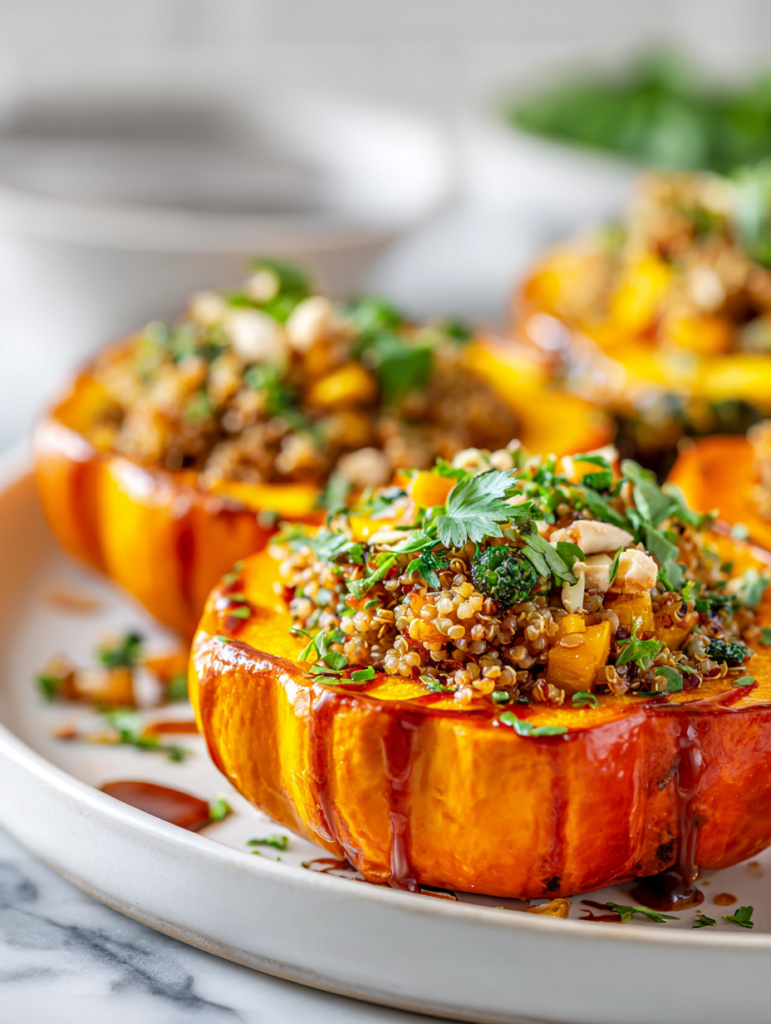
Squash in fall feels like wrapping yourself in a warm, colorful blanket. This recipe takes that seasonal beauty and elevates it into a hearty, eye-catching dish that’s perfect for cozy dinners or casual gatherings. I love how each ripe squash is like a little edible sculpture, waiting to be filled with something vibrant and flavorful.
The best part? It’s surprisingly forgiving. You can swap in different fillings or squash types depending on what’s in your fridge or what’s on sale. It’s a simple, honest way to celebrate the harvest, turning humble vegetables into something special without fuss. Plus, the smell of roasting squash with herbs makes the whole house smell like autumn’s first day.
Focusing on the seasonal beauty of squash, this recipe transforms humble vegetables into a comforting, colorful centerpiece that celebrates fall’s bounty.
A Seasonal Spin on Stuffed Squash
- Cooking this dish always takes me back to autumn family dinners, where the house fills with warm, nutty aromas.
- I used to be intimidated by squash, but now I love how forgiving and adaptable this recipe is, especially with whatever grains or nuts I have on hand.
- There’s a quiet pride in transforming a simple vegetable into a vibrant, hearty centerpiece that surprises even the skeptics at the table.
- Honestly, the best part is the first bite—creamy, smoky, with a hint of sweetness from the roasted squash, it’s pure comfort in every forkful.
- Sometimes I make this just for myself, as a reminder that good, nourishing food doesn’t need to be complicated or perfect.
The story behind this recipe
- This recipe was born out of a chilly autumn evening when I had a half-used butternut squash and a handful of leftover grains. I wanted something warm, filling, but also bright and fresh, so I started experimenting with stuffing ideas. The moment I tasted that first bite, I knew I had to make it a regular part of my fall repertoire.
- There’s a simplicity to it that feels honest—just good ingredients, roasted to bring out their natural sweetness, then packed with flavor and texture. I love how each squash feels like a little edible bowl, waiting to be filled with whatever I have on hand. It’s a dish that rewards improvisation and patience, and it smells like comfort with every step.
- heading: A Cozy, Creative Fall Staple
Historical and Cultural Roots
- Stuffed squash recipes date back centuries, with roots in Mediterranean and Middle Eastern cuisines, where vegetables were often filled with grains and herbs.
- The idea of hollowing out vegetables and filling them with flavorful mixtures was a practical way to stretch ingredients and create a hearty, portable meal long before modern kitchens.
- In many cultures, stuffed vegetables like zucchini and pumpkin symbolize abundance and harvest, making them a natural choice for seasonal celebrations.
- Vegan versions of stuffed squash gained popularity in recent decades as part of the plant-based movement, emphasizing simple, wholesome ingredients that highlight the vegetable’s natural sweetness.
Ingredient breakdown
- Butternut squash: I love how its sweet, nutty aroma fills the kitchen as it roasts—swap for acorn squash if you want a nuttier flavor.
- Quinoa: It’s fluffy and slightly chewy, offering a perfect base for stuffing; you can replace it with millet for a slightly earthier bite.
- Chopped nuts: I use walnuts for crunch and richness, but pecans or almonds work well too—just toast them lightly for extra flavor.
- Fresh herbs: Parsley and sage brighten the filling with fresh, herbal notes—dried herbs can be a good substitute but lose some vibrancy.
- Lemon zest: Adds a zesty pop that cuts through the richness—skip if you prefer a milder flavor, but it really lifts the dish.
- Olive oil: I drizzle it over before roasting for a glossy, crispy top—use a good quality extra virgin for the best aroma and taste.
- Seasonings: A pinch of smoked paprika adds depth and a smoky warmth—feel free to skip or adjust based on your spice preference.
Spotlight on key ingredients
Butternut squash:
- Its sweet, nutty aroma and smooth flesh become deeply caramelized and tender when roasted—look for bright, firm squash, and don’t skimp on roasting time.
- Chopped nuts: I prefer walnuts for their rich, earthy crunch; they toast quickly and add a warm, toasted flavor that contrasts beautifully with the sweetness of the squash.
Quinoa:
- Fluffy and slightly chewy, it soaks up flavors well. During cooking, it emits a mild nutty scent and expands to double size, offering a hearty base for stuffing.
- Lemon zest: Brightens the filling with a fragrant, citrus punch. It releases a fresh, zingy aroma when grated and balances the richness of the roasted squash.
Notes for ingredient swaps
- Dairy-Free: Use coconut yogurt instead of cheese for creaminess, but expect a subtle coconut flavor.
- Grains: Swap quinoa for millet or bulgur—each brings a slightly different texture and nutty note.
- Nuts: Pecans or almonds can replace walnuts, offering a different crunch and richness.
- Herbs: Fresh basil or thyme can replace parsley or sage, adding unique aromatic qualities.
- Oil: Avocado oil can be used instead of olive oil for a milder, buttery note.
- Sweeteners: A drizzle of maple syrup instead of balsamic vinegar adds a gentle sweetness and depth.
- Spices: Smoked paprika can be replaced with chipotle powder for a more intense smoky heat.
Equipment & Tools
- Baking sheet: Roast the squash evenly
- Parchment paper: Prevent sticking and easy cleanup
- Saucepan: Cook the quinoa
- Skillet: Toast nuts and sauté herbs if needed
- Mixing bowl: Combine filling ingredients
- Spoon or fork: Scoop out flesh and fill the squash
Step-by-step guide to stuffed squash
- Preheat your oven to 200°C (390°F). Slice the squash in half lengthwise and scoop out the seeds, leaving about 1/2 inch of flesh attached to the skin. Set aside the seeds for roasting if desired.
- Place the squash halves cut-side up on a baking sheet lined with parchment paper. Brush the flesh with 1 tablespoon of olive oil and sprinkle with a pinch of salt and pepper. Roast for 40-45 minutes, until the flesh is tender and easily pierced with a fork.
- While the squash roasts, cook 1 cup of quinoa. Rinse it under cold water, then combine with 2 cups of water in a saucepan. Bring to a boil, reduce to a simmer, cover, and cook for 15 minutes until fluffy. Fluff with a fork and set aside.
- In a skillet over medium heat, toast 1/4 cup of chopped walnuts for 3-4 minutes until fragrant and slightly golden. Remove and set aside.
- Prepare the filling: in a large bowl, combine the cooked quinoa, toasted walnuts, 1/4 cup chopped fresh parsley, 1 teaspoon lemon zest, 1 teaspoon smoked paprika, and 2 tablespoons olive oil. Mix well and taste; adjust salt and pepper as needed.
- Once the squash halves are cool enough to handle, carefully scoop out the flesh into a mixing bowl. Mash lightly with a fork, then fold in the prepared quinoa mixture. Check for seasoning—add more herbs or lemon zest if desired.
- Stuff the squash shells generously with the filling, pressing down slightly to pack. Return to the oven and bake for an additional 15 minutes, until the filling is heated through and slightly golden on top.
- Remove from oven and let rest for 5 minutes. Garnish with extra parsley or herbs if desired. Serve warm, directly on the baking sheet or on individual plates.
Let the stuffed squash rest for 5 minutes outside the oven. Serve directly from the baking sheet or transfer to plates. Garnish with fresh herbs for color and aroma.
How to Know It’s Done
- Squash flesh is tender and easily pierced with a fork.
- Filling is hot and slightly crispy on top after baking.
- Squash shells hold their shape without collapsing when filled.
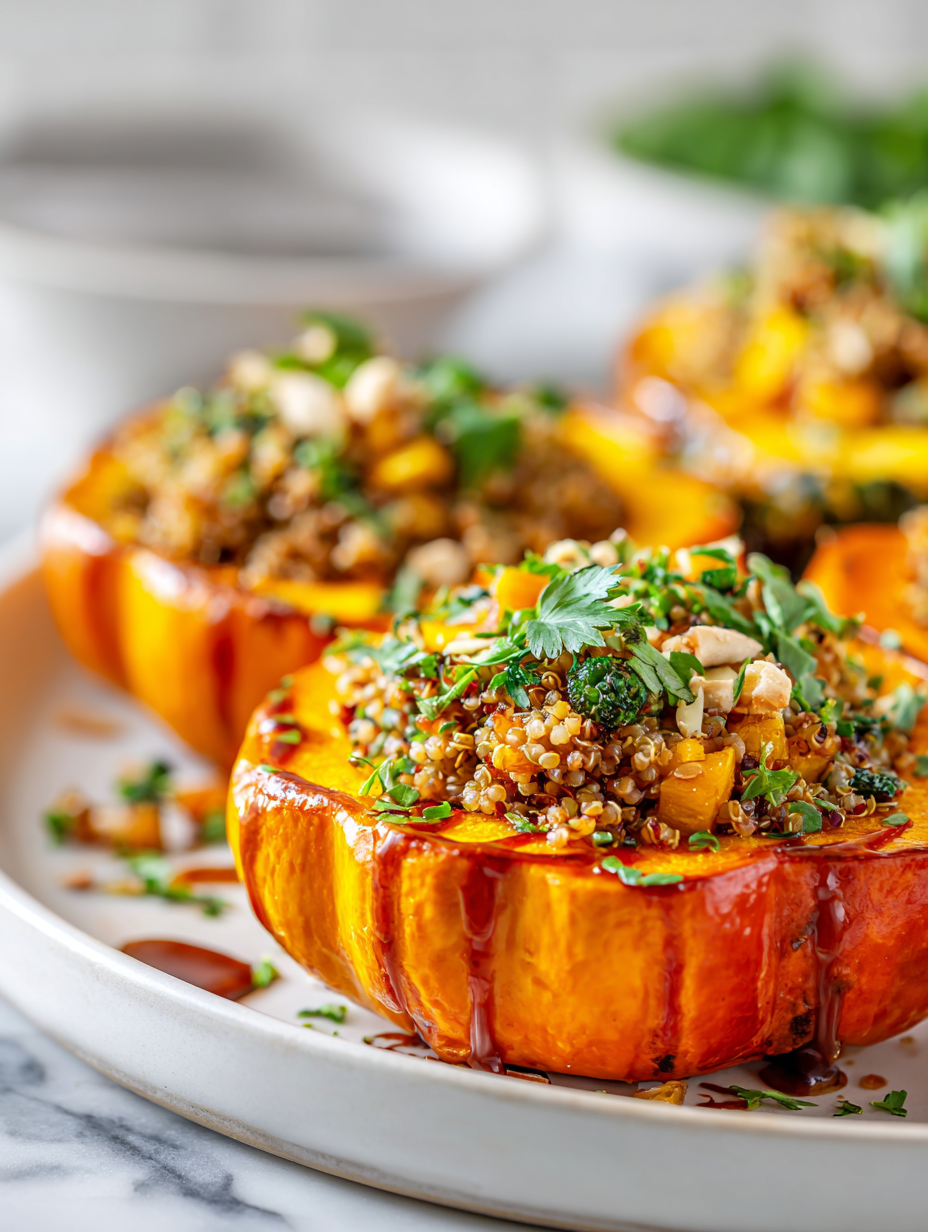
Stuffed Fall Squash
Ingredients
Equipment
Method
- Preheat your oven to 200°C (390°F). Slice the butternut squash in half lengthwise and scoop out the seeds with a spoon. Place the halves cut-side down on a parchment-lined baking sheet and roast for 40-45 minutes until the flesh is soft and easily pierced with a fork.
- While the squash roasts, rinse the quinoa under cold water, then combine it with 2 cups of water in a saucepan. Bring to a boil, then reduce the heat to low, cover, and simmer for about 15 minutes until fluffy and water is absorbed. Fluff with a fork and set aside.
- In a skillet over medium heat, toast the chopped walnuts for 3-4 minutes until fragrant and golden. Remove from the skillet and set aside to cool slightly.
- Once the squash is cool enough to handle, scoop out most of the flesh into a mixing bowl, leaving a border to help hold the shape. Mash the flesh lightly with a fork until smooth.
- Add the cooked quinoa, toasted walnuts, chopped parsley, lemon zest, smoked paprika, and minced garlic to the mashed squash. Drizzle with 1 tablespoon of olive oil, then season with salt and pepper. Mix everything together until well combined and fragrant.
- Carefully stuff the squash shells with the prepared filling, pressing down gently to pack it in. Return the stuffed halves to the oven and bake for an additional 15 minutes until the filling is heated through and the top is slightly crispy and golden.
- Remove from the oven and let the stuffed squash rest for 5 minutes. Then, garnish with extra parsley if desired, and serve warm for a comforting fall-inspired meal.
Pro tips for perfect stuffed squash
- Use a sharp knife to halve the squash cleanly—dull blades slip easily.
- Roast squash cut-side down for even caramelization and easier scooping.
- Fluff cooked quinoa with a fork to keep it light and prevent clumping.
- Toast nuts until fragrant but not burnt—watch closely as they can go from perfect to bitter quickly.
- Season the filling generously—taste and adjust before stuffing to ensure full flavor.
- Bake stuffed squash until filling is hot and edges are slightly crispy—about 15 minutes at 200°C (390°F).
- Rest the baked squash for at least 5 minutes; it helps set the filling and makes serving neater.
Common mistakes and how to fix them
- FORGOT to check squash tenderness; test with a fork, it should be soft but not mushy.
- DUMPED filling into hot squash; let it cool 5 minutes to prevent cracking.
- OVER-TORCHED nuts; toast until fragrant, then remove immediately to avoid bitterness.
- FAILED to season properly; taste filling before stuffing, adjust salt and herbs accordingly.
Quick fixes and pantry swaps
- If squash is too firm, cover and bake a few extra minutes until tender.
- Splash a bit of lemon juice if filling turns dull before stuffing.
- Patch burnt nuts with fresh toasted ones—quick crunch fixes the smoky flavor.
- Shield delicate filling with foil if edges start to over-torch during final bake.
- When in doubt, swap canned lentils for grains for a quicker, equally hearty stuffing.
Prep, store, and reheat tips
- Prepare the filling mixture and refrigerate up to 24 hours; it thickens slightly but retains flavor and moisture.
- Roast the squash a day ahead, then cool, cover, and store in the fridge for up to 2 days—reheat thoroughly before serving.
- Leftovers keep well for 3-4 days in an airtight container; reheat in the oven at 180°C (350°F) until steaming and fragrant.
- To reheat, bake covered with foil for 15-20 minutes; the aroma of warmed squash and spices will rekindle with a gentle crackle.
- For best flavor, reheat the filling separately if possible; rewarm in a skillet or microwave until hot and fragrant.
Top questions about vegan stuffed squash
1. How do I cut the squash safely?
Use a sharp paring knife or small serrated knife to halve the squash cleanly. It helps avoid slips and uneven cuts.
2. How long does the squash take to roast?
Roast the squash cut-side down for 40-45 minutes at 200°C (390°F). It should be tender and caramelized on the edges.
3. How do I cook quinoa properly?
Cook quinoa for about 15 minutes until fluffy and the water is absorbed. Fluff with a fork for lightness.
4. How do I toast nuts without burning them?
Toast nuts until fragrant, about 3-4 minutes, watching closely so they don’t burn and turn bitter.
5. When should I stuff the squash?
Stuff the squash when cool enough to handle. Bake the filled squash for an additional 15 minutes at 200°C (390°F).
6. Can I use a different type of squash?
You can swap butternut with acorn squash for a slightly different flavor and texture. Both work well.
7. What nuts can I use instead?
Replace walnuts with pecans or almonds for a different crunch and flavor profile, depending on what you like.
8. Can I use dried herbs?
Use fresh herbs for brightness—parsley and sage are best, but dried herbs can work if fresh aren’t available.
9. How do I reheat leftovers?
Reheat leftovers at 180°C (350°F) until steaming and fragrant, about 15 minutes. Cover with foil if needed.
10. What if the filling loses flavor after reheating?
If the filling turns dull, squeeze a little lemon juice to brighten the flavor before serving.
This dish isn’t just about filling squash, it’s about capturing the essence of seasonal simplicity—sweet, smoky, and nourishing. Every bite reminds me how humble ingredients can become something memorable with a little care and patience.
In the midst of busy weeks or quiet weekends, taking the time to roast, stuff, and savor makes the kitchen feel slower and more intentional. It’s a small act of mindfulness that turns ordinary vegetables into a celebration of fall’s bounty.