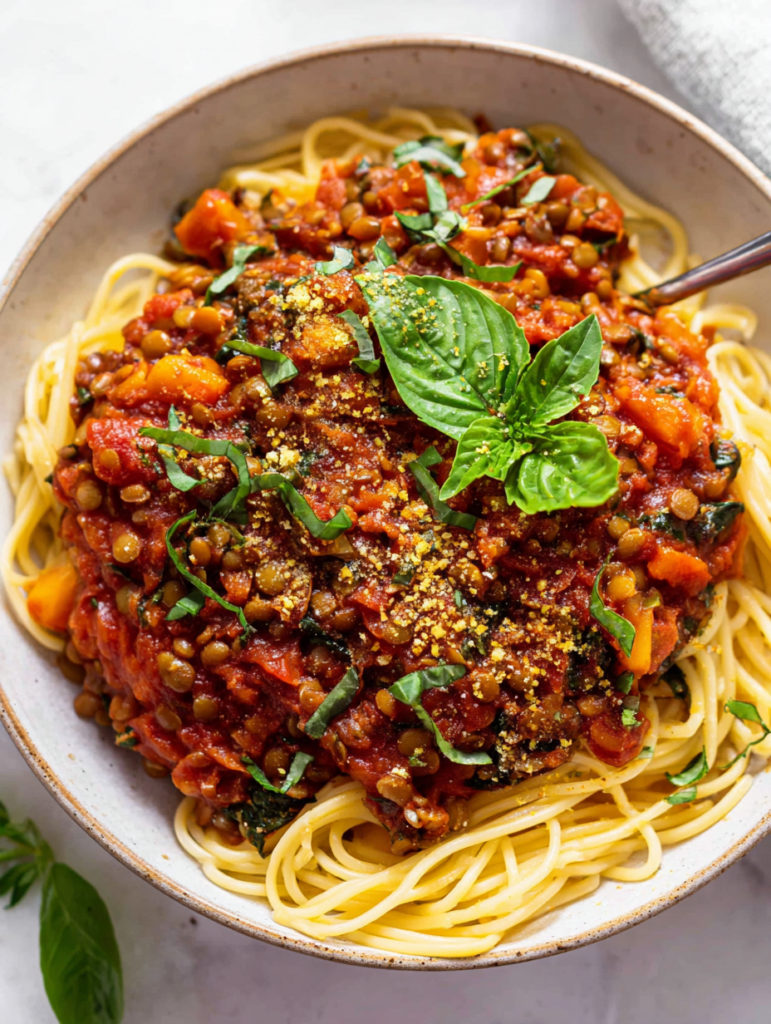
This vegan Bolognese is a nod to childhood dinners, where the smell of simmering tomato and herbs filled the house. It’s about capturing that deep, comforting richness without a hint of meat, proving plant-based can be just as soulful. I love how it turns humble pantry staples into something that feels indulgent and warm.
What really makes this recipe special is how forgiving it is—no need for fancy ingredients or long, complicated steps. It’s a dish I turn to on busy nights when I crave comfort but want to keep it kind to the planet. Plus, the aroma alone—slow-cooked tomato, garlic, and a splash of wine—brings back memories of family kitchens and lazy weekends.
Focusing on the nostalgic comfort of childhood meals, this vegan Bolognese aims to re-create that rich, meaty depth using only plant-based ingredients, reminding us that flavor doesn’t need to rely on animal products to be satisfying.
The story behind this recipe
- This recipe grew out of a chilly autumn evening when I was craving something hearty but wanted to avoid the usual heavy, meaty sauces. I remembered a friend’s story about her grandmother’s vegetable-based ragu, and suddenly, it felt like the perfect starting point. I started experimenting with lentils, mushrooms, and a splash of soy sauce—things I already had in the pantry, no fuss. The first time I tasted it, I was hit with a deep, savory richness that fooled even my skeptical taste buds.
- What keeps me coming back to this dish is how it transforms humble ingredients into something soulful. It’s a reminder that plant-based cooking doesn’t have to be complicated or bland; it can be layered, comforting, and deeply satisfying. Plus, the smell—slow-cooked tomato, garlic, and herbs—fills the house with a warmth that feels like a hug.
- heading: ‘The story behind this recipe’
Ingredient breakdown
- Mushrooms: I love how they develop a meaty, umami punch that tricks the palate, especially when browned until slightly crispy. Feel free to swap with eggplant for a softer texture that still adds depth.
- Lentils: These tiny powerhouses bring a hearty texture and absorb flavors beautifully. Red lentils cook faster and give a smoother sauce, but green or brown lentils add more bite and structure.
- Tomato paste: It’s the concentrated, rich backbone of this sauce, giving that deep, savory sweetness. If you don’t have tomato paste, a splash of crushed canned tomatoes can work, just simmer longer to thicken.
- Carrots: I dice them small so they melt into the sauce, adding a gentle sweetness and color. You can swap with parsnips for a slightly earthier note, or skip if you want a chunkier veggie feel.
- Herbs & spices: Basil, thyme, and a bay leaf create a fragrant, layered aroma. Fresh herbs are bright and lively, but dried work if you add them early enough to bloom in the sauce. A pinch of smoked paprika can deepen the smoky undertone.
- Soy sauce: It’s my secret weapon for umami richness, imbuing the sauce with a savory, almost meaty depth. Tamari works as a gluten-free alternative, or a splash of miso can add a similar savoriness.
- Olive oil: Use good quality, cold-pressed for a fruity, rich base. It helps sauté everything to develop flavor and adds a subtle shine to the finished dish. Feel free to experiment with a splash of sesame oil for an extra layer of aroma.
Spotlight on key ingredients
Mushrooms and Lentils:
- Mushrooms: I love how they develop a meaty, umami punch that tricks the palate, especially when browned until slightly crispy. Feel free to swap with eggplant for a softer texture that still adds depth.
- Lentils: These tiny powerhouses bring a hearty texture and absorb flavors beautifully. Red lentils cook faster and give a smoother sauce, but green or brown lentils add more bite and structure.
Notes for ingredient swaps
- Fresh Mushrooms: I love how they develop a meaty, umami punch that tricks the palate. Swap with eggplant for a softer texture that still adds depth.
- Lentils: These tiny powerhouses bring a hearty texture and absorb flavors beautifully. Red lentils cook faster and give a smoother sauce, but green or brown lentils add more bite and structure.
- Tomato Paste: It’s the concentrated, rich backbone of this sauce, giving that deep, savory sweetness. If you don’t have tomato paste, a splash of crushed canned tomatoes can work, just simmer longer to thicken.
- Carrots: I dice them small so they melt into the sauce, adding a gentle sweetness and color. You can swap with parsnips for a slightly earthier note, or skip if you want a chunkier veggie feel.
- Herbs & Spices: Basil, thyme, and a bay leaf create a fragrant, layered aroma. Fresh herbs are bright and lively, but dried work if you add them early enough to bloom in the sauce. A pinch of smoked paprika can deepen the smoky undertone.
- Soy Sauce: It’s my secret weapon for umami richness, imbuing the sauce with a savory, almost meaty depth. Tamari works as a gluten-free alternative, or a splash of miso can add a similar savoriness.
- Olive Oil: Use good quality, cold-pressed for a fruity, rich base. It helps sauté everything to develop flavor and adds a subtle shine to the finished dish. Feel free to experiment with a splash of sesame oil for an extra layer of aroma.
Equipment & Tools
- Large skillet or sauté pan: For cooking the sauce evenly.
- Wooden spoon: To stir and scrape the bottom without damaging the pan.
- Measuring spoons: To add precise amounts of oil and seasonings.
- Sharp knife: For dicing vegetables.
Step-by-step guide to vegan Bolognese
- Gather your equipment: a large skillet or sauté pan, a wooden spoon, measuring spoons, and a sharp knife. Preheat the pan over medium heat (about 160°C/320°F).
- Dice 1 onion and 2 cloves garlic finely. Finely chop 2 carrots and 2 celery stalks. Set aside.
- Add 2 tablespoons olive oil to the pan. Once shimmering, sauté the onion and garlic until translucent, about 5 minutes. They should smell sweet and fragrant, with a slight golden edge.
- Toss in the carrots and celery. Cook, stirring often, until they soften and start to brown slightly, about 8 minutes. The mixture should look vibrant and slightly caramelized.
- Add 1 cup dried lentils (rinsed) and 2 tablespoons tomato paste. Cook for 2-3 minutes, stirring to coat everything in tomato paste and release its aroma.
- Pour in 1 can (14 oz) crushed tomatoes and 1/4 cup red wine (optional). Stir well. Bring to a simmer and reduce heat to low (about 85°C/185°F). Cover partially and cook for 30-35 minutes, stirring occasionally.
- During simmering, the sauce should thicken, the lentils should become tender, and the aroma will deepen with tomato and herbs. If the sauce gets too thick, add a splash of water or vegetable broth. If it’s too thin, uncover and simmer a little longer.
- Taste and adjust seasoning: add salt, pepper, a splash of soy sauce or a pinch of smoked paprika if desired. The sauce should taste savory, with a rich, umami depth.
- Once the sauce is thick and the lentils are soft, turn off heat. Let it rest for 5 minutes to settle flavors. Meanwhile, cook your favorite pasta until al dente, about 8-10 minutes.
- Serve the vegan Bolognese over hot pasta. Garnish with fresh basil or parsley if you like. The sauce should cling to the noodles, glossy and fragrant.
Let the sauce rest off heat for 5 minutes. Toss with freshly cooked, drained pasta. Serve hot, garnished with herbs if desired.
How to Know It’s Done
- The sauce has a deep, rich color and smells savory with herbs and garlic, indicating full flavor development.
- Lentils are tender and break apart slightly when pressed with a spoon, showing they’re cooked through.
- The sauce is thick enough to coat the pasta without pooling, with a glossy sheen.
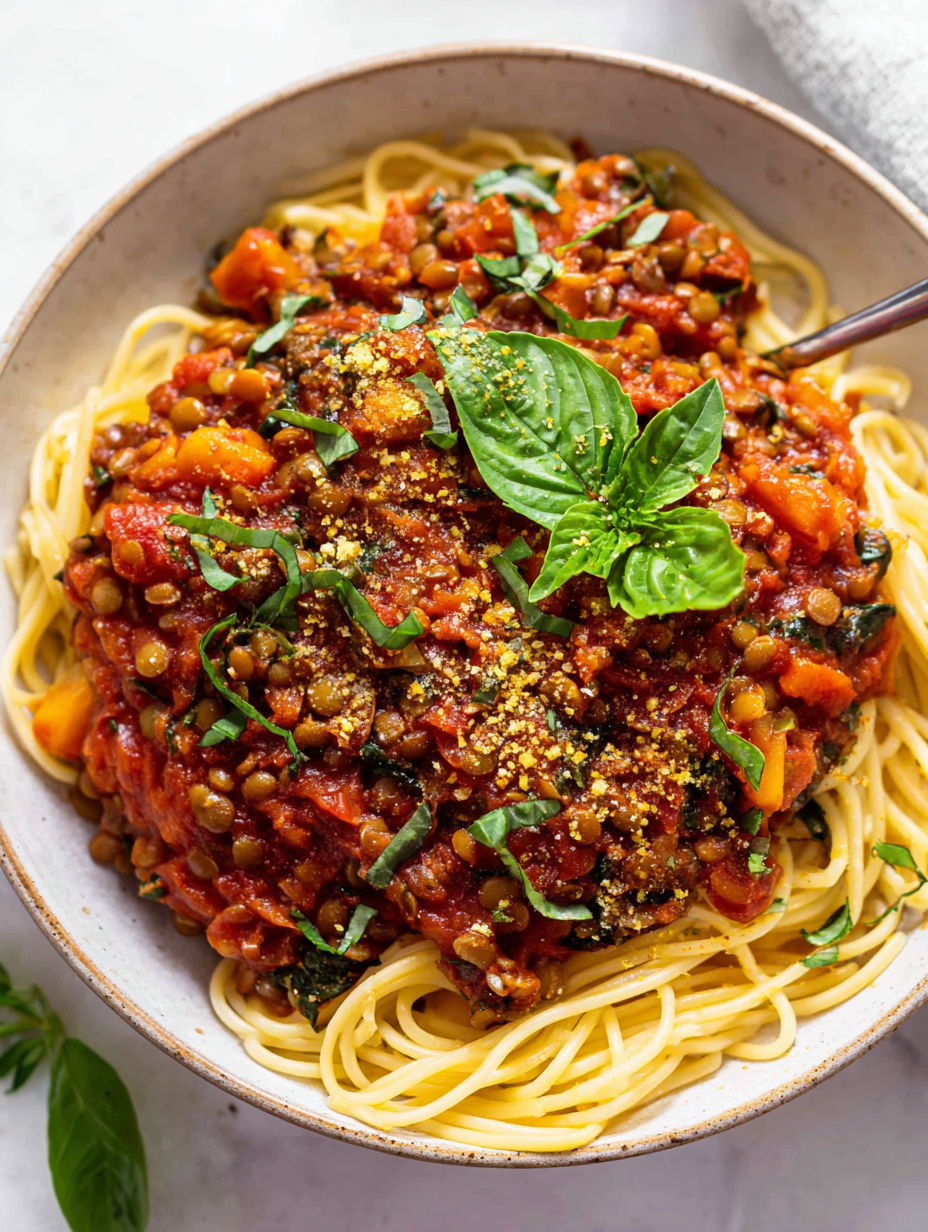
Vegan Bolognese
Ingredients
Equipment
Method
- Heat the olive oil in a large skillet over medium heat until it shimmers and starts to gently smoke. Add the finely diced onion and minced garlic, sautéing until fragrant and translucent, about 5 minutes, filling your kitchen with a sweet aroma.
- Add the diced carrots and chopped celery to the pan. Stir well and cook, stirring occasionally, until the vegetables soften and start to brown slightly, about 8 minutes. The mixture should become vibrant and fragrant with a hint of caramelization.
- Toss in the chopped mushrooms and cook, stirring often, until they release their juices and develop a slightly crispy edge, about 8 minutes. The mushrooms’ umami aroma will deepen, filling the air with a savory scent.
- Add the rinsed lentils and tomato paste to the pan. Stir thoroughly to coat all the ingredients and cook for about 2-3 minutes, allowing the tomato paste to deepen in color and aroma.
- Pour in the crushed tomatoes and red wine (if using). Stir well and bring the mixture to a gentle simmer. Reduce the heat to low, partially cover the pan, and let it cook slowly for 30-35 minutes, stirring occasionally. The sauce will thicken, and the flavors will meld beautifully.
- As the sauce reduces, you’ll notice it becomes glossy and coats the back of your spoon. Remove the bay leaf and stir in the soy sauce, basil, and thyme. Taste and adjust seasoning as needed, adding salt or pepper if desired.
- Turn off the heat and let the sauce rest for about 5 minutes. This helps the flavors settle and develop further. Meanwhile, cook your favorite pasta until al dente, following package instructions.
- Serve the rich, thick vegan Bolognese over the hot pasta, garnishing with fresh herbs if desired. The sauce should cling beautifully to the noodles, glossy and inviting, ready to enjoy with a sprinkle of fresh basil or parsley.
Pro tips for vegan Bolognese
- Use a splash of soy sauce during simmering for an instant umami boost that fills the kitchen with savory aroma.
- Sauté mushrooms until slightly crispy and fragrant; it intensifies their meaty flavor and adds texture to the sauce.
- Add diced carrots in small, uniform pieces so they melt into the sauce, creating a subtle sweetness and vibrant color.
- When simmering, keep the heat gentle and uncovered towards the end to thicken the sauce naturally and develop richer flavors.
- Taste and adjust seasoning at the end—sometimes a dash of balsamic vinegar or a pinch of smoked paprika can elevate depth.
- Use a wooden spoon to stir—this helps scrape up browned bits and builds flavor without damaging your pan.
- Rest the sauce off heat for 5 minutes before serving—this allows flavors to meld and enhances overall richness.
Common mistakes and how to fix them
- FORGOT to check sauce thickness before serving → Simmer longer until sauce is glossy and coats the back of a spoon.
- DUMPED in all ingredients at once → Sauté aromatics first, then add vegetables and lentils for layered flavor.
- OVER-TORCHED the garlic → Cook garlic over medium heat until fragrant, not browned, to prevent bitterness.
- USED cold oil for sautéing → Warm oil first to prevent sticking and ensure even cooking.
Quick fixes and pantry swaps
- When sauce is too thick, splash in hot water and stir until smooth.
- If sauce is too watery, simmer uncovered until it thickens and deepens in aroma.
- Splash soy sauce when the sauce tastes flat for instant umami boost.
- Patch over-salted sauce with a small potato—remove after boiling to absorb excess salt.
- Shield burnt bits by quickly scraping the bottom and lowering heat immediately.
Prep, store, and reheat tips
- Prepare the sauce components—dice vegetables and measure lentils—ahead to save time during busy evenings. The flavors deepen overnight in the fridge.
- Store cooled Bolognese in an airtight container in the fridge for up to 3 days. The sauce thickens slightly, so a splash of water or broth helps rehydrate it when reheating.
- For longer storage, freeze in portions for up to 3 months. Thaw overnight in the fridge, then reheat, smelling for that rich, tomato-y aroma before serving.
- Reheat gently on the stovetop over low heat, stirring often. The sauce will bubble and release a inviting, savory scent, becoming glossy and thick again.
Top questions about vegan Bolognese
1. Can I make this sauce with canned lentils or mushrooms?
Use cooked lentils or mushrooms for a meaty texture that satisfies the craving for depth and umami.
2. Can I use canned ingredients instead of dried or fresh?
Yes, just rinse canned lentils and mushrooms before adding. Adjust cooking time for softer texture.
3. How can I enhance the flavor if it tastes flat?
Add a splash of balsamic vinegar or soy sauce near the end to boost depth and richness.
4. My sauce is too thin, what should I do?
Simmer longer to thicken, or add a splash of water and cook uncovered until it reaches desired consistency.
5. Does the type of oil matter for flavor?
Use a good-quality olive oil for sautéing to bring out the best flavor and aroma in the sauce.
6. Can I skip the olive oil or reduce it?
Yes, you can substitute with vegetable broth or water if you prefer a milder, less oily sauce.
7. How long does it keep in the freezer?
You can freeze it in portions for up to 3 months. Thaw overnight in the fridge before reheating.
8. What’s the best way to reheat leftovers?
Reheat gently on the stovetop, stirring often, until bubbling and fragrant, about 10 minutes.
9. Can I add other vegetables to this sauce?
Yes, you can add grated carrots, zucchini, or bell peppers for extra color and sweetness.
10. Any tips for customizing the flavor?
Taste as you go—adjust salt, spice, and acidity to match your preferred flavor profile.
This vegan Bolognese isn’t just a weeknight fix; it’s a reminder that plant-based can be deeply satisfying without fuss. The aroma alone—slow-cooked tomato, garlic, herbs—fills the house with a warm, welcoming scent. It’s one of those dishes that makes you pause, breathe in, and feel a little more grounded.
In a world rushing toward quick fixes, this sauce offers comfort rooted in simple, honest ingredients. It’s a dish that invites you to slow down and enjoy the process—and the lingering, rich flavors long after the last bite.