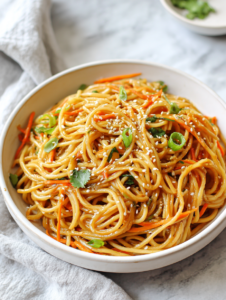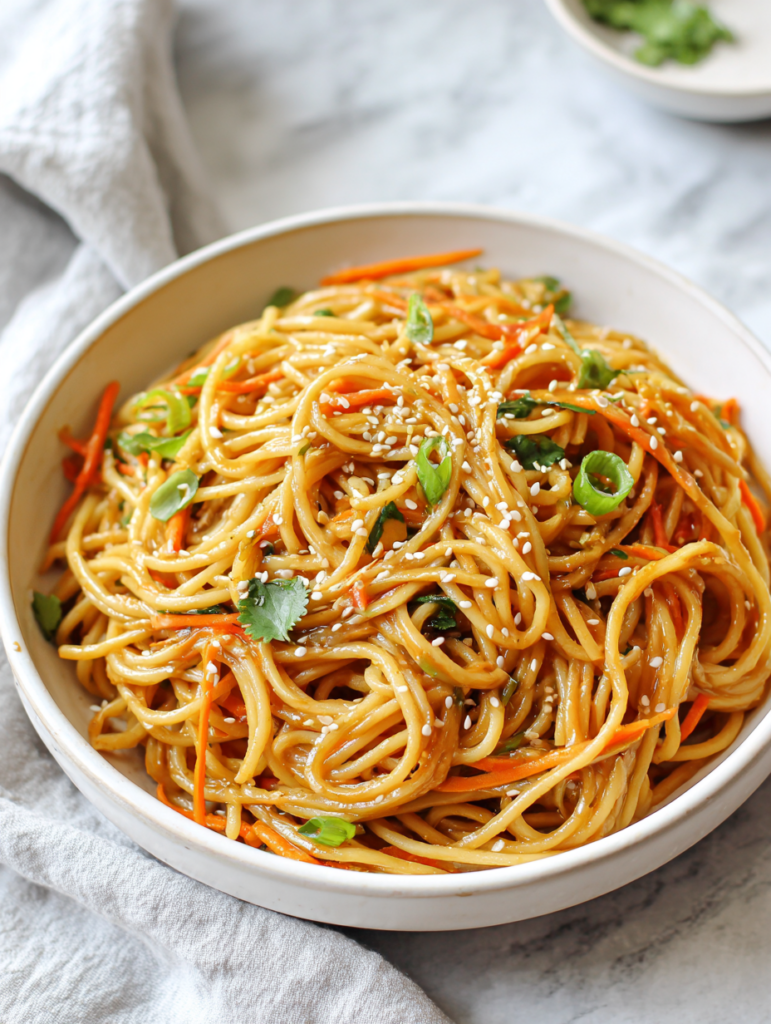
Vegan sesame noodles might seem simple, but they’re all about that delicate dance between richness and brightness. I’ve always loved how a splash of citrus can cut through the oily, nutty depths of sesame oil, transforming the dish from just comforting to downright addictive. It’s a quick fix for those nights when I crave something warm, satisfying, yet unexpectedly fresh.
What I appreciate most is how versatile this recipe is—no fuss, no fancy ingredients, just honest flavors. It’s the kind of dish that feels indulgent without any dairy or animal products, perfect for balancing out a busy week or a casual gathering. And honestly, once you get that perfect balance of sesame, citrus, and a little sweetness, it’s hard to go back to plain noodles.
These noodles aren’t just about the taste—they’re about that moment in the kitchen when everything comes together. A quick toss, a fragrant swirl of sesame oil, and a squeeze of lemon or lime make it feel like a little celebration in a bowl. Plus, it’s endlessly adaptable, so you can toss in your favorite veggies or protein—whatever makes you happy.
Focusing on the overlooked art of balancing sesame oil’s richness with a splash of citrus to elevate vegan noodles, making them feel indulgent yet fresh.
The story behind this recipe
- This dish came about on a rainy Sunday when I was craving something quick yet satisfying, but I also wanted to honor the simple beauty of sesame oil. I remember the first time I added a splash of lime—it balanced everything so perfectly, like a little secret in every bite.
- I used to think noodles were just a quick carb fix, but this recipe changed that. It’s become my go-to when I need comfort with a twist, a dish that feels indulgent but is honestly just pantry staples and good timing. Now, I keep a jar of tahini and a squeeze bottle of citrus nearby—those two are magic together.
- Every time I make these noodles, I’m reminded how small tweaks—like a dash of soy or a sprinkle of scallions—can turn a basic meal into something memorable. It’s honest cooking, no fuss, just a bowl of flavor that feels like a little win after a busy day.
Key ingredients at a glance
- Sesame oil: I love how its toasty, nutty aroma fills my kitchen, almost like a warm blanket. If you want a slightly milder flavor, try a light toasted sesame oil, but don’t skip the richness it brings.
- Soy sauce: I prefer a naturally brewed soy for depth, but coconut aminos work well if you’re avoiding soy. Just be aware it’ll add a subtle sweetness instead of saltiness.
- Lemon or lime juice: The citrus brightens everything up and cuts through the oil’s richness. I always squeeze in fresh—no bottled stuff—because the zing is sharper and more refreshing.
- Maple syrup or agave: Just a touch balances the salt and sesame’s smoky depth. If you want it more savory, skip the sweetener altogether, but I find a tiny drizzle makes a real difference.
- Noodles: I use soba or rice noodles because they hold flavor well and have a satisfying chew. For gluten-free, rice noodles are perfect, but don’t overcook—they get mushy fast.
- Garlic & ginger: Freshly minced, they add a punch of aroma and warmth. If you’re in a rush, a good squeeze of ginger paste and garlic from a jar will do, but fresh really wakes up the dish.
- Scallions & sesame seeds: For that crunch and visual pop. Toast the sesame seeds lightly in a dry pan until fragrant—trust me, those toasty notes make all the difference.
Spotlight on key ingredients
Sesame oil:
- I love how its toasty, nutty aroma fills my kitchen, almost like a warm blanket. If you want a slightly milder flavor, try a light toasted sesame oil, but don’t skip the richness it brings.
- Soy sauce: I prefer a naturally brewed soy for depth, but coconut aminos work well if you’re avoiding soy. Just be aware it’ll add a subtle sweetness instead of saltiness.
Citrus and noodles:
- Lemon or lime juice: The citrus brightens everything up and cuts through the oil’s richness. I always squeeze in fresh—no bottled stuff—because the zing is sharper and more refreshing.
- Noodles: I use soba or rice noodles because they hold flavor well and have a satisfying chew. For gluten-free, rice noodles are perfect, but don’t overcook—they get mushy fast.
Notes for ingredient swaps
- Oil-Free: Swap sesame oil for toasted sunflower or pumpkin seed oil. You lose some nutty depth but gain a milder, less oily finish.
- Gluten-Free: Use rice or buckwheat noodles instead of wheat-based ones. They’ll keep the texture light and chewy, with a slightly different flavor profile.
- Soy-Free: Replace soy sauce with coconut aminos. It’s sweeter and less salty but still adds umami and saltiness.
- Citrus Variations: Lemon is bright and sharp; lime adds a tropical zing. Or try orange for a sweeter, more mellow citrus note.
- Sweetener: Maple syrup brings a warm, caramel undertone. Agave is more neutral, but honey (if not vegan) adds a floral sweetness.
- Add-Ins: Incorporate shredded veggies like carrots or cucumbers for crunch, or toss in tofu for extra protein and texture.
- Noodle Types: Soba holds flavor well and has a hearty bite; rice noodles are delicate and gluten-free, but watch for overcooking to avoid mushiness.
Equipment & Tools
- Large pot: Boil noodles quickly and evenly.
- Colander: Drain and rinse noodles.
- Small bowl: Whisk sauce ingredients.
- Dry skillet: Toast sesame seeds.
- Large mixing bowl: Toss noodles with sauce and toppings.
- Tongs or chopsticks: Mix and serve noodles evenly.
Step-by-step guide to vegan sesame noodles
- Gather all equipment and ingredients before starting. Fill a large pot with water, bring to a rolling boil at 100°C (212°F).
- Cook the noodles: Add noodles to boiling water. Cook according to package instructions, usually 8-10 minutes, until al dente. Drain and rinse with cold water to stop cooking. Set aside.
- Prepare the sauce: In a small bowl, whisk together 3 tbsp toasted sesame oil, 2 tbsp soy sauce, 1 tbsp lemon juice, 1 tsp maple syrup, and 1 minced garlic clove. Adjust to taste.
- Toast sesame seeds: In a dry skillet over medium heat, toast 1 tbsp sesame seeds until golden and fragrant, about 2 minutes. Set aside.
- Mix the noodles and sauce: Transfer noodles to a large mixing bowl. Pour the sauce over and toss thoroughly until evenly coated. The noodles should glisten and smell nutty with citrus brightness.
- Add fresh ingredients: Stir in sliced scallions and a sprinkle of toasted sesame seeds. For extra crunch, toss in shredded carrots or chopped bell peppers if desired.
- Taste and adjust: Check seasoning — add a splash more soy or citrus if needed. If sauce feels too thick, add a teaspoon of warm water and toss again.
- Finish with a squeeze of lemon or lime: Just before serving, add a final splash of citrus to brighten the dish and balance the richness.
- Rest briefly: Let the noodles sit for 2-3 minutes to absorb flavors. Toss again before plating to redistribe the sauce.
- Plate and garnish: Serve immediately, garnished with extra sesame seeds and chopped scallions for visual appeal.
Let the noodles rest for a few minutes to allow flavors to meld. Toss again before serving, then plate with extra garnishes for visual and textural contrast.
How to Know It’s Done
- Noodles are al dente and not sticky.
- Sauce is fragrant, nutty, and bright with citrus.
- Sesame seeds are toasted golden and fragrant.
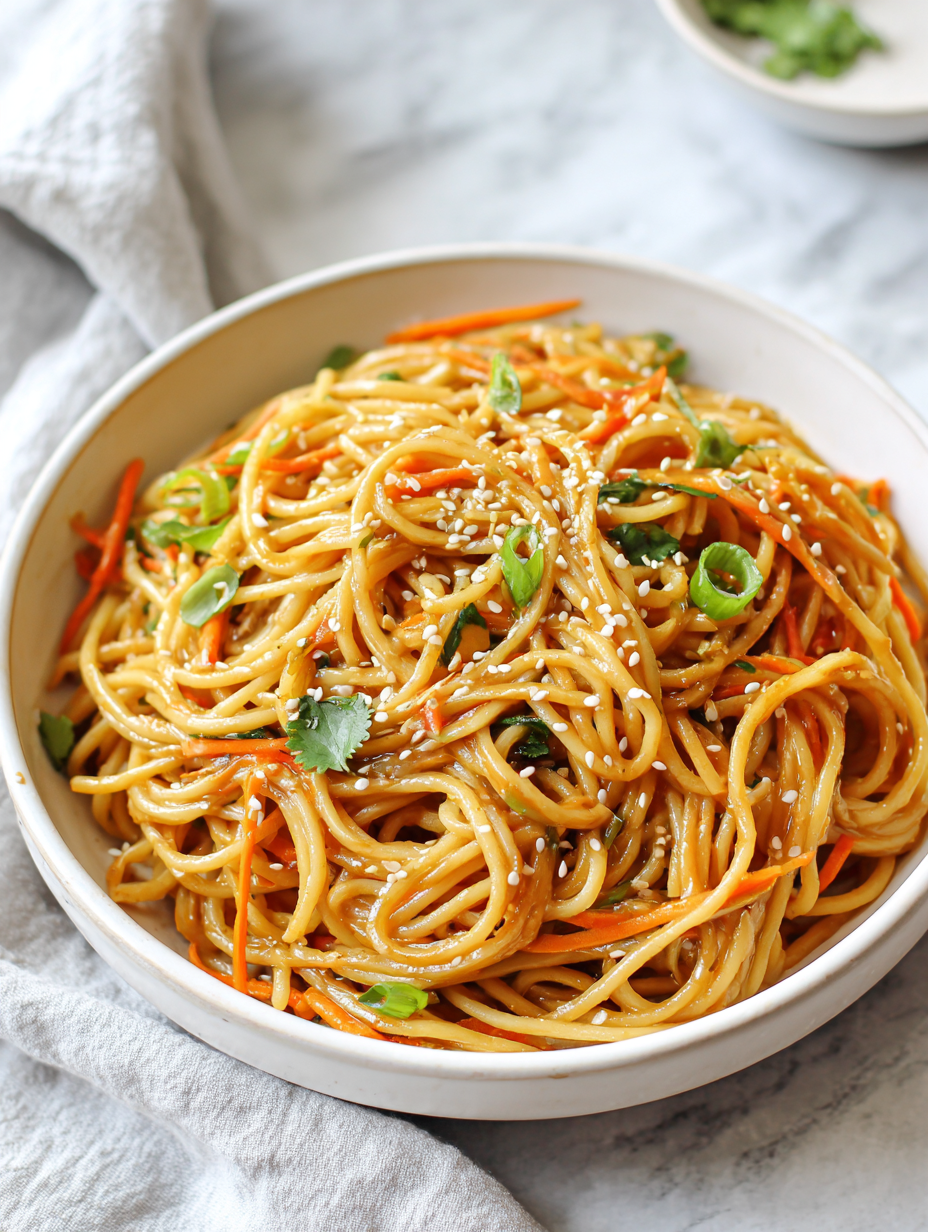
Vegan Sesame Noodles
Ingredients
Equipment
Method
- Bring a large pot of water to a rolling boil. Add the rice or soba noodles and cook according to package instructions until al dente, usually 8-10 minutes. Drain and rinse with cold water to stop the cooking process, then set aside.
- In a small bowl, whisk together 2 tablespoons of toasted sesame oil, soy sauce, fresh lemon or lime juice, maple syrup, minced garlic, and grated ginger until well combined. This creates a fragrant, slightly thickened sauce.
- Heat a dry skillet over medium heat. Add the sesame seeds and toast, shaking the pan frequently, until they are golden and aromatic, about 2 minutes. Remove from heat and set aside.
- Pour the cooked noodles into a large mixing bowl. Drizzle with the remaining 1 tablespoon of toasted sesame oil and toss gently to coat the noodles evenly in the oil's fragrant aroma.
- Pour the prepared sauce over the noodles. Use tongs or chopsticks to toss everything together thoroughly, ensuring each strand is glossy and coated with the flavorful sauce.
- Add the toasted sesame seeds and sliced scallions to the noodles. Toss again gently to distribute the toppings evenly and add a fresh crunch and pop of color.
- Give the noodles a quick taste and adjust the seasoning if needed — a splash more soy or citrus can brighten the flavors further. Serve immediately to enjoy the bright, nutty aroma and glossy texture.
Notes
Pro tips for perfect sesame noodles
- Bolded mini-head: Toast sesame seeds over medium heat until golden, releasing a fragrant nutty aroma—trust your nose.
- Bolded mini-head: Warm your noodles briefly in hot water before tossing to ensure they absorb the sauce evenly.
- Bolded mini-head: Use tongs to toss noodles with sauce for even coating without breaking them apart.
- Bolded mini-head: Add citrus juice just before serving to keep that sharp, fresh brightness intact.
- Bolded mini-head: Lightly shake the skillet when toasting sesame seeds to avoid burning and get that perfect toasty crunch.
- Bolded mini-head: For a richer sauce, gently warm the sesame oil before mixing—avoid smoking or overheating it.
- Bolded mini-head: Chill leftover noodles briefly before serving again—they’ll absorb flavors better and regain a chewy texture.
Common mistakes and how to fix them
- FORGOT to toast sesame seeds → Lightly toast for nutty aroma.
- DUMPED sauce ingredients → Mix ingredients thoroughly for balanced flavor.
- OVER-TORCHED sesame seeds → Toast until fragrant and golden, not burnt.
- MISSED adjusting seasoning → Taste and tweak soy or citrus before serving.
Quick fixes and pantry swaps
- When sauce feels too thick, splash in warm water and stir until silky.
- If sesame seeds aren’t toasted enough, re-toast briefly in a dry pan to boost aroma.
- Splash soy sauce on over-salted noodles to dilute saltiness quickly.
- Patch dull noodles by tossing with fresh citrus juice before serving.
- Shield delicate noodles from sticking by tossing in a drizzle of oil after cooking.
Prep, store, and reheat tips
- Prepare the sauce and toast sesame seeds in advance; store separately in airtight containers for up to 3 days, keeping aromas fresh and vibrant.
- Cook noodles ahead of time, rinse with cold water, and store in an airtight container in the fridge for up to 24 hours to prevent sticking and preserve texture.
- Assemble the dish just before serving to maintain the bright citrus flavor and to keep the noodles from drying out or becoming soggy.
- Reheat leftovers gently in a skillet over low heat or toss cold noodles with fresh sauce—sensory cue: aroma should be nutty and citrusy, noodles still chewy.
- Noodles and sauce can be refrigerated for 1–2 days; flavors deepen slightly, so taste and adjust seasoning before serving again if needed.
Top questions about vegan sesame noodles
1. Can I use regular sesame oil instead of toasted?
Use toasted sesame oil for depth and aroma, but be mindful not to overuse as it’s quite strong.
2. Is there a substitute for toasted sesame oil?
Yes, but toasted sesame oil adds a richer, nuttier flavor. Light sesame oil will make it milder and less aromatic.
3. Can I skip the citrus?
Fresh citrus like lemon or lime brightens up the dish and cuts through the oil’s richness, adding a zingy punch.
4. What if I don’t have citrus juice?
Absolutely, but citrus really lifts the flavors and balances the richness. Try a splash of vinegar if citrus isn’t available.
5. Can I replace soy sauce?
Use tamari or coconut aminos if soy sauce isn’t available; they give a similar umami flavor with slight differences.
6. What’s a good soy sauce alternative?
Yes, just keep in mind coconut aminos are slightly sweeter and less salty. Adjust seasoning accordingly.
7. How do I toast sesame seeds properly?
Toasted sesame seeds add crunch and nuttiness; lightly toast in a dry pan until fragrant and golden.
8. How do I know when sesame seeds are toasted?
Toast until they’re golden and smell nutty, about 2 minutes over medium heat, then cool before adding.
9. Can I make this dish ahead of time?
Yes, you can prepare the sauce and toast sesame seeds ahead. Store separately and combine just before serving.
10. How do I reheat leftovers without ruining the texture?
Reheat noodles gently in a skillet or toss cold with fresh citrus to refresh flavors and maintain texture.
These vegan sesame noodles aren’t just about the flavor—they’re about that moment in the kitchen when everything comes together. A quick toss, a fragrant swirl of sesame oil, and a squeeze of citrus make it feel like a little celebration in a bowl. Plus, it’s endlessly adaptable, so you can toss in your favorite veggies or protein—whatever makes you happy.
In a world full of fast, often uninspired meals, this dish offers a simple reminder that honest ingredients and a few thoughtful touches can turn a humble bowl into something memorable. It’s a dish I come back to when I need a quick, satisfying fix that feels both nourishing and bright. Honestly, that balance of richness and zing keeps me coming back for more.