There’s something about the smell of toasted garlic that instantly transports me. It’s that first crackle in the pan, the warm, nutty aroma that makes everything feel a little more special, even on a busy weeknight. This vegan Spaghetti Aglio e Olio is my go-to when I want a quick, honest dish that’s all about flavor and simplicity.
I’ve always loved how a handful of ingredients—garlic, chili, good olive oil—can come together to make something so rich in scent and taste. Toasting garlic slowly until it’s golden and fragrant turns this humble pasta into a nostalgic moment, reminding me of lazy dinners and carefree kitchen afternoons.
This recipe isn’t about perfection or fancy ingredients. It’s about honest cooking, the kind that makes you smile when you realize how little it takes to turn a simple plate into something memorable. It’s comfort food, dressed up in a way that feels both spontaneous and satisfying.
Focusing on how the simple act of toasting garlic transforms this dish into a fragrant, nostalgic moment that turns everyday pasta into something memorable.
The story behind this recipe
- One rainy afternoon, I was rummaging through my pantry, craving something quick but packed with flavor. I remembered a trip to Italy, where I watched locals toss simple pasta with garlic and chili, no fuss, just pure aroma. That moment stuck with me, inspiring this vegan version that’s all about highlighting garlic’s transformative power.
- Years ago, I had a batch of garlic that was a little too fiery for most dishes, but I found that slow toasting mellowed it out beautifully. That gentle, smoky aroma became the heart of this dish, reminding me that even imperfect ingredients can shine when treated right.
- This recipe is really about reclaiming those simple, honest flavors—garlic, olive oil, chili—without overthinking. It’s a nod to nostalgic late-night dinners, where less really is more, and the kitchen fills with the scent of toasted garlic and a little heat, making everything feel just right.
Ingredient breakdown: key components
- Garlic: I love the way thin slices sizzle and turn a rich, golden hue—make sure to toast slowly to release that deep, nutty aroma. Skip the haste, or you’ll end up with burnt bits that taste bitter.
- Olive oil: I prefer a good extra virgin that’s peppery and grassy—pour generously, it’s the base of all the flavor. If you want a milder profile, use a lighter oil, but don’t skimp on quality.
- Red chili flakes: I like a bit of heat that’s just enough to make your nose tingle—start with a pinch, then add more if you like fiery. Remember, they’ll toast quickly, so keep an eye on them to avoid burning.
- Spaghetti: I opt for a traditional durum wheat pasta—al dente, of course. Use gluten-free if needed, but cook it a little more than usual if you prefer softer noodles, since they’ll soak up more oil.
- Salt: I always taste the water—salty like the sea, not overpowering. Too much salt in the water will make the pasta stand out too much, so go easy at first and adjust after draining.
- Fresh parsley (optional): I toss in chopped parsley for a burst of freshness—add at the end to keep that bright, herbal note. Dried herbs won’t give the same vibrancy, so fresh is best if you can.
Spotlight on key ingredients
Garlic:
- I love how sliced garlic sizzles and turns a rich, golden hue—slow toast for deep, nutty aroma. Rush it, and you’ll get bitter burnt bits, so patience is key.
- Olive oil: I prefer a peppery, grassy extra virgin—pour generously as it’s the flavor base. If you want a milder touch, go for lighter oils but don’t skimp on quality.
Olive oil:
- Red chili flakes: I like a gentle tingle—start with a pinch, then build heat. They toast quickly; keep an eye to prevent burning and bitterness, aiming for a fragrant, spicy pop.
- ingredient
- Red chili flakes
Notes for ingredient swaps
- Garlic: Roasted garlic offers a mellow, sweet flavor—skip the raw or lightly toasted for a softer, less pungent taste.
- Olive oil: Use toasted sesame oil for a nuttier aroma or avocado oil for a milder, buttery note—adjust flavor accordingly.
- Red chili flakes: Smoked paprika can add depth and a smoky touch—use sparingly to avoid overpowering the garlic.
- Spaghetti: Zucchini noodles or kelp noodles make for a lighter, veggie-forward alternative—pay attention to texture and moisture.
- Salt: Seaweed flakes or miso paste can enhance umami—be cautious, as they add saltiness and depth, so adjust quantity.
- Fresh parsley: Basil or cilantro provide different herbal brightness—add at the end for vibrant, fresh bursts.
Equipment & Tools
- Large saucepan: Cook the pasta evenly in boiling water.
- Skillet or frying pan: Toast garlic and combine pasta for flavor.
- Tongs or pasta fork: Toss and mix pasta comfortably.
- Measuring spoons: Accurately measure oil and chili flakes.
- Slotted spoon or colander: Drain pasta efficiently without losing water.
Step-by-step guide to vegan Spaghetti Aglio e Olio
- Equipment ready: large saucepan for pasta, skillet for garlic, tongs or pasta fork, measuring spoons, and a slotted spoon or pasta strainer.
- Bring a large pot of water to a rolling boil, about 100°C (212°F). Salt generously—salty like the sea. Drop in spaghetti and cook until just al dente, about 8 minutes. Drain, reserving about ½ cup pasta water.
- While pasta cooks, heat the skillet over medium-low heat, around 160°C (320°F). Add 3 tbsp olive oil and let it warm up. Slice garlic thinly—aim for translucent, not burnt, about 2 minutes of gentle crackling and fragrant aroma.
- Add chili flakes to the garlic and oil, stir quickly for 30 seconds, releasing their spicy scent. Watch for a slightly sizzling, aromatic oil—don’t let it darken or smell burnt.
- Toss drained pasta directly into the skillet, using tongs or a fork. Mix well, coating pasta evenly with garlic and chili oil. If it looks dry, splash in a bit of reserved pasta water and stir until glossy.
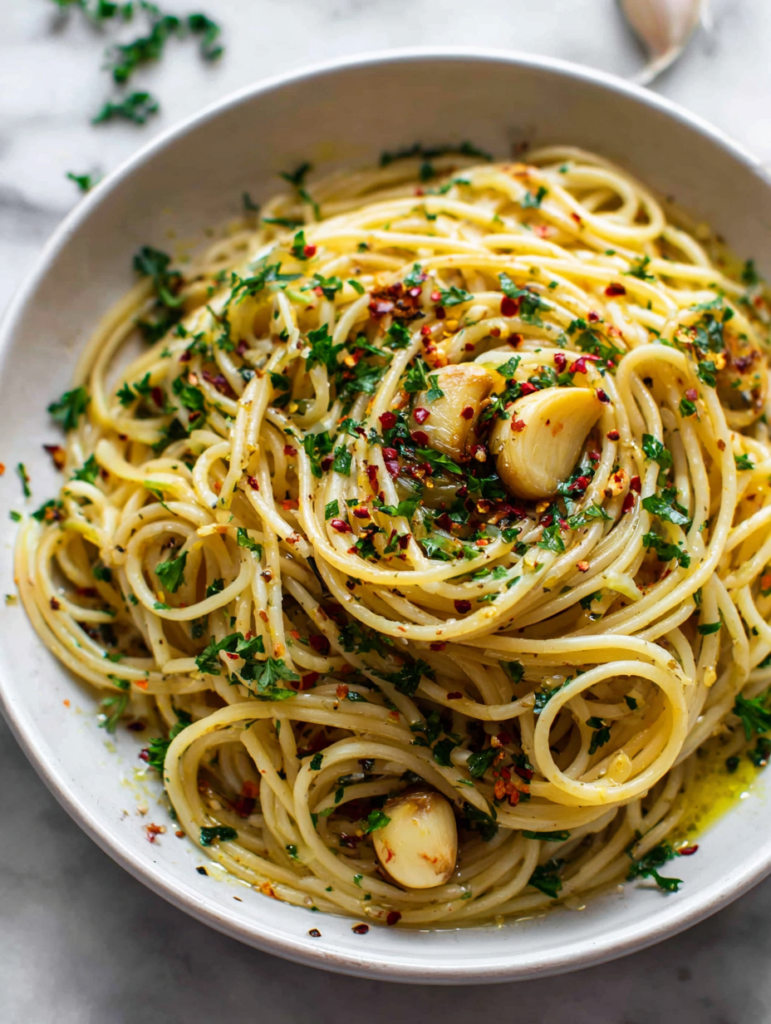
- Cook together for 1-2 minutes, allowing flavors to meld. The pasta should shimmer with oil, garlic should be golden, and chili flakes evenly distributed. If garlic darkens or burns, remove from heat immediately.
- Remove from heat. Taste and adjust salt if needed. Toss in chopped parsley if using, for a fresh herbal hit. Plate immediately, spooning the oil-coated noodles into serving dishes.
- Finish by drizzling a little more olive oil or a squeeze of lemon if desired. Rest for a minute to let flavors settle, then serve hot with a sprinkle of extra chili flakes or fresh herbs.
Serve immediately while hot. Rest for a minute for flavors to settle. Finish with a drizzle of olive oil or lemon, and sprinkle extra herbs or chili flakes if desired.
How to Know It’s Done
- Garlic is golden and fragrant, not burnt or bitter.
- Pasta is al dente, with a slight bite but not hard in the center.
- Oil shimmers and coats the pasta evenly, with chili flakes evenly dispersed.
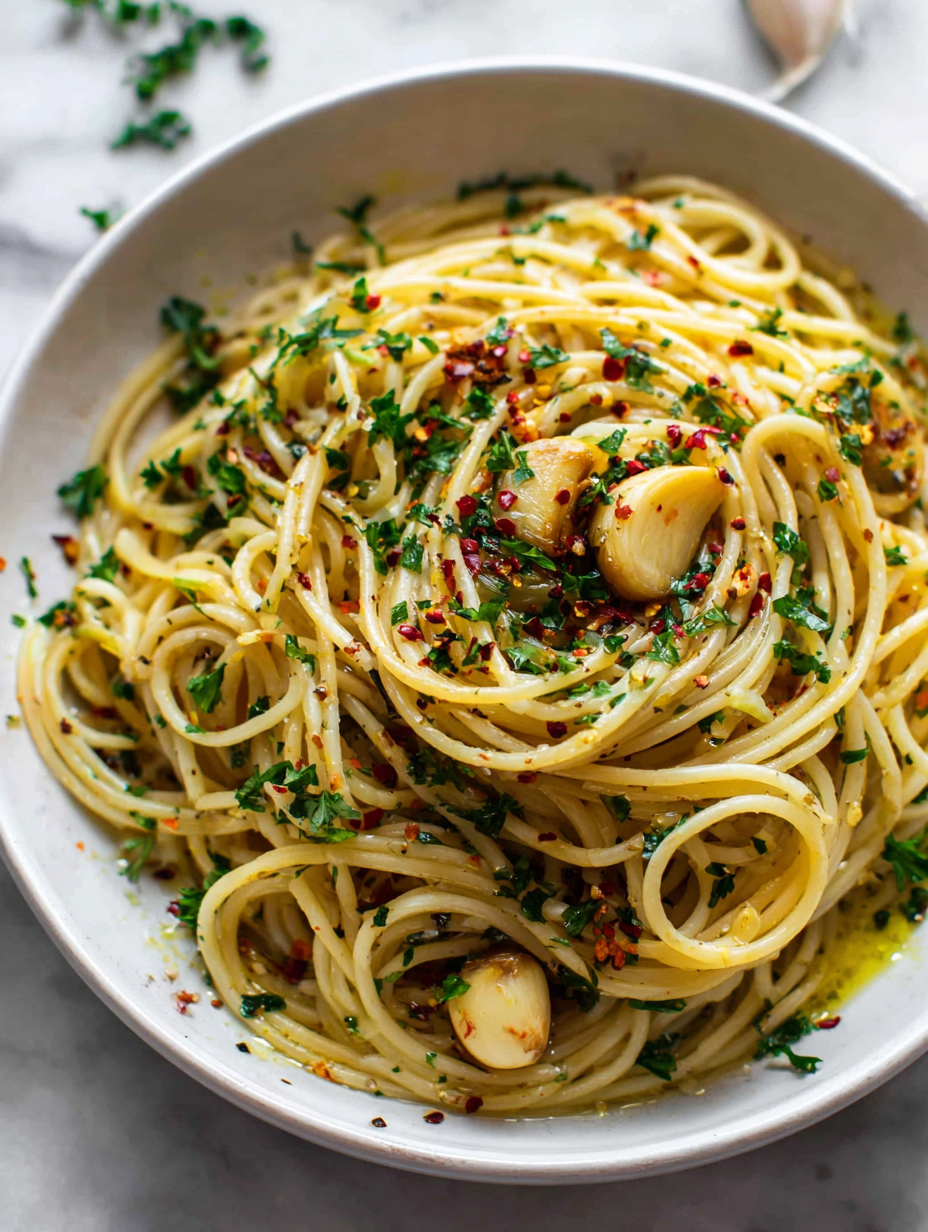
Vegan Spaghetti Aglio e Olio
Ingredients
Equipment
Method
- Bring a large pot of salted water to a rolling boil, then add the spaghetti and cook until just al dente, about 8 minutes. Drain, reserving ½ cup of pasta water, and set aside.
- While the pasta cooks, heat a skillet over medium-low heat and add the olive oil, warming it until it shimmers gently.
- Slide the thinly sliced garlic into the hot oil, cooking slowly and stirring gently until the slices turn a golden, fragrant hue—about 2 minutes. You should hear a gentle crackle and smell a nutty aroma.
- Add the red chili flakes to the skillet and stir quickly for about 30 seconds, allowing their spicy fragrance to infuse into the oil and garlic.
- Immediately toss the drained spaghetti into the skillet, using tongs or a pasta fork to coat the noodles evenly with the garlic and chili-infused oil. If it looks dry, add a splash of the reserved pasta water and stir until glossy.
- Cook everything together for 1-2 minutes, allowing the flavors to meld and the pasta to soak up the fragrant oil. The garlic should be golden and fragrant, and the noodles glossy and coated beautifully.
- Remove from heat, taste, and adjust salt as needed. Toss in chopped parsley if using for a bright herbal finish, then transfer to serving plates.
- Finish with an extra drizzle of olive oil or a squeeze of lemon if desired, and serve immediately while hot and fragrant.
Tips for perfect Aglio e Olio
- Golden garlic: Slowly toast thin slices until fragrant and golden—avoid rushes or it’ll burn and turn bitter.
- Oil shimmer: Let the olive oil heat just enough so it shimmers; it’s ready when garlic hits the oil and crackles gently.
- Spice control: Toast chili flakes briefly with garlic—only 30 seconds—until fragrant; too long, and they burn, turning acrid.
- Pasta coating: Toss drained pasta into the skillet while hot—use tongs for even coating and a glossy, flavorful surface.
- Rescue splash: If the garlic starts to darken, add a splash of reserved pasta water to cool and mellow the heat.
- Flavor boost: Finish with a drizzle of good olive oil or a squeeze of lemon—brings brightness and balances richness.
- Timing sense: The garlic should be golden and fragrant, not burnt; pull it off heat immediately if it darkens.
Common mistakes and how to fix them
- FORGOT to control heat → Keep garlic on low to prevent burning.
- DUMPED all oil at once → Add oil gradually for even toasting and flavor development.
- OVER-TORCHED garlic → Remove from heat immediately if garlic darkens to avoid bitterness.
- MISSED salting pasta water → Taste test for proper saltiness; it’s crucial for flavor balance.
Quick fixes and pantry swaps
- When garlic smokes and turns bitter, splash with a teaspoon of lemon juice to mellow.
- If pasta clumps, rinse with hot water and toss with fresh olive oil to loosen.
- Splash a little pasta water if oil separates or noodles look dry and dull.
- Patch burnt garlic by removing it immediately and adding fresh slices to recover aroma.
- Shield over-salted water by rinsing pasta briefly under cold running water before tossing.
Prep, store, and reheat tips
- Prep the garlic: Thinly slice and toast gently until golden—done ahead, stored in an airtight container for up to 2 days. The aroma will be rich and nutty when reheated.
- Cook the pasta al dente: Drain and toss with a bit of olive oil to prevent sticking. Store in a sealed container for up to 1 day; it may absorb flavors, so reheat with extra oil or water.
- Toast and flavor the garlic mixture: Prepare the garlic and chili oil base in advance, refrigerate for up to 2 days. Reheat gently to release fragrant aroma before tossing with pasta.
- Reheating: Warm gently in a skillet over low heat, stirring frequently. The garlic will revive, and the oil will shimmer, creating that fresh, toasted smell again. Avoid high heat to prevent burning.
Top questions about vegan Spaghetti Aglio e Olio
1. How do I get perfectly toasted garlic?
Use thinly sliced garlic and toast on low heat until fragrant and golden. This releases its nutty aroma without burning.
2. Can I make this gluten-free?
Yes, gluten-free pasta works well. Just cook it a little longer if you prefer softer noodles.
3. How spicy should it be?
Start with a small pinch of chili flakes and add more to taste. Toast them briefly with garlic for the best flavor.
4. Why do I need reserved pasta water?
Reserve a cup of pasta water before draining. It helps loosen the sauce and adds silkiness if needed.
5. What kind of olive oil is best?
Use high-quality extra virgin olive oil for rich flavor. It’s the base for the fragrant, glossy sauce.
6. Can I add herbs?
Yes, add chopped fresh parsley or basil at the end for a vibrant herbal note that brightens the dish.
7. How do I avoid burnt garlic?
Overcooking garlic can make it bitter. Keep an eye on it and remove the pan once it turns golden and fragrant.
8. What’s the best equipment for this recipe?
Use a large skillet to give the garlic room to toast evenly and the pasta space to coat well.
9. Should I add lemon or extra oil?
Finish with a squeeze of lemon or a drizzle of extra oil for added brightness and richness before serving.
10. How do I store leftovers?
Store leftover garlic oil in the fridge for up to 2 days. Reheat gently to revive aroma and flavor.
This simple pasta dish might seem humble, but the aroma of toasted garlic and chili oil makes it feel like a special moment every time. It’s quick, honest, and a reminder that less really is more in the kitchen.
Whenever I make this, I’m struck by how a handful of ingredients can create such a comforting, fragrant dish. It’s perfect for those busy nights when you want something flavorful without fuss, and it always leaves my kitchen smelling incredible.